
Light gauge steel framing is a modern construction system widely used in residential, commercial, and industrial buildings. It has become an essential solution for projects that require speed, precision, and cost efficiency. Whether used for houses, offices, or modular buildings, understanding this system is highly valuable for anyone involved in the construction industry.
WHAT IS A LIGHT GAUGE STEEL FRAMING?
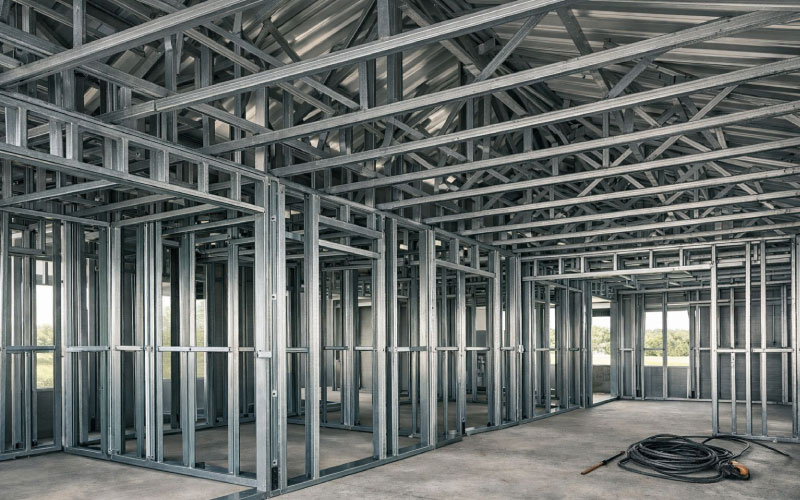
Light gauge steel framing is a construction method that uses thin, cold-formed steel sections to create structural steel frameworks. Also known as cold formed steel framing, it is designed to provide strength, durability, and flexibility while remaining lightweight, allowing faster and more efficient installation. Thanks to its advantages, this system is widely used in modern buildings, from residential homes to commercial and prefabricated structures.
TYPES OF LIGHT GAUGE STEEL FRAMING
There are several types of light gauge steel framing, each designed to meet different structural and construction needs. These systems can be based on their function, such as load-bearing or non-load bearing walls, or by their method of construction, including panelized and modular approaches. The choice of system depends on factors like building height, design flexibility, construction speed, cost efficiency.
-
Load-Bearing Wall System
Walls made of cold-formed steel studs and tracks carry vertical loads from floors and roofs. They are commonly used in low-rise to mid-rise residential buildings due to simplicity and cost efficiency.
-
Non-Load Bearing Wall System
Walls do not support structural loads; they are installed within a primary structure (concrete or heavy steel frame). Cold formed steel framing mainly used in multi-story buildings as partitions or façade walls.
-
Panelized System
Wall, floor, and roof sections are prefabricated in a factory and transported to the site for assembly. They improve construction speed, quality control, and reduce on-site labor.
-
Modular System
Entire 3D modules (rooms or building units) are manufactured off-site and assembled on-site. They allow very fast construction and are ideal for repetitive building types like hotels or dormitories.
-
Skeleton Frame
The structure consists of steel columns and beams, while walls are non-structural infill elements. That offers design flexibility and is suitable for larger or more buildings.
-
Hybrid System
Combines light gauge framing with other structural materials such as reinforced concrete, hot-rolled steel, or timber. They used to optimize structural performance, cost, or adapt to specific project requirements.
MAIN APPLICATIONS LIGHT GAUGE STEEL FRAMING
-
Residential Buildings
They are extensively used in residential construction, including single-family houses, villas and low-rise to mid-rise apartment buildings. Its lightweight nature reduces foundation loads, while its high strength ensures structural reliability. These systems are also valued for their speed of construction, precision (due to prefabrication), and resistance to common issues such as termites, rot, and fire. This makes it a durable and cost-effective solution for modern housing projects.
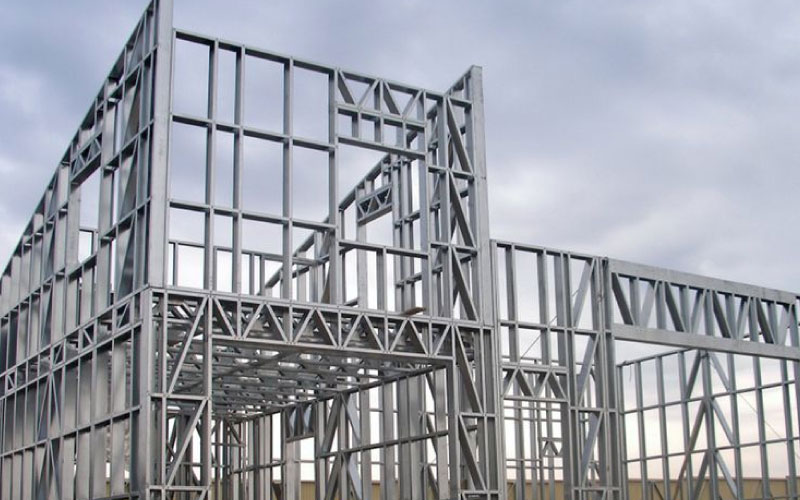
Cold formed steel framing is commonly applied in commercial projects such as office buildings, retail shops, and shopping centers. It allows for flexible interior layouts, which is important for spaces that may need to be reconfigured over time. In addition, the use of prefabricated elements accelerates construction schedules, helping developers reduce project timelines and costs. Its clean and precise construction also facilities the integration of building services like electrical and HVAC systems.
-
Institutional Buildings
In institutional projects like schools, hospitals, and administrative buildings, light gauge steel framing provides a reliable and consistent construction method. The material’s strength-to-weight ratio ensures structural safety, while its non-combustible nature improves fire performance. Furthermore, the precision of factory-made components helps meet strict facilities.
-
Industrial Buildings
Light gauge framing is used in industrial applications such as warehouses, workshops, and storage facilities. Its ability to create lightweight yet strong structural systems makes it suitable for buildings that require large open spaces. It can also be combined with other structural systems to accommodate heavy loads or specialized industrial needs. Additionally, the speed of construction is a major advantage in industrial projects where time is critical.
-
Modular and Prefabricated Construction
One of the most important applications of it is modular and prefabricated construction, including hotels, student housing, and temporary or relocatable buildings. Components or entire modules are manufactured off-site in controlled factory environments, ensuring high quality and reducing material waste. These modules are then transported and assembled on-site, significantly shortening construction time and minimizing disruption, especially in urban areas.
ADVANTAGES AND DISADVANTAGES OF LIGHT GAUGE STEEL FRAMING
-
Advantages
- Fast and Efficient Construction
Their systems are largely prefabricated in factories, which allows for quick and precise assembly on site. This significantly reduces construction time compared to traditional reduction, and buildings can become operational sooner: an important advantage in both residential and industrial projects.
- Lightweight but Strong
Even though the steel sections are thin and lightweight, they offer a high strength-to-weight ratio. This makes systems such as steel stud framing highly efficient compared to traditional methods like concrete. As a result, projects can be completed faster, labor costs are reduced, and buildings can become operational sooner, an important advantage in both residential and industrial projects.
- High quality and Durability
Light gauge steel framing is manufactured under strict quality control factory conditions, ensuring consistent dimensions and high precision. Steel is resistant to common issues such as warping, cracking, termites, and rot, which often affect traditional materials like wood. As a result, structures maintain their integrity over time, require less maintenance, and offer a longer lifespan in both residential and industrial applications.
-
Disadvantages
- Thermal and Insulation Issues
Steel is a good conductor of heat, which can create thermal bridging problems. This means heat can easily pass through the structure, reducing energy efficiency if not properly treated. To overcome this, additional insulation materials and design strategies are required.
- Fire performance limitations
Although steel is non-combustible, it loses strength when exposed to high temperatures. In the event of a fire, this can affect the structural stability of the building. Therefore, light gauge steel framing systems usually require fire protection measures such as gypsum or fire-resistant coatings.
- Corrosion Risk and Maintenance
Steel can corrode if it is exposed to moisture or harsh environment conditions, especially if protective coatings are damaged. Proper design, material selection, and maintenance necessary to prevent long-term deterioration.
QUALITY STANDARDS IN LIGHT GAUGE STEEL FRAMING
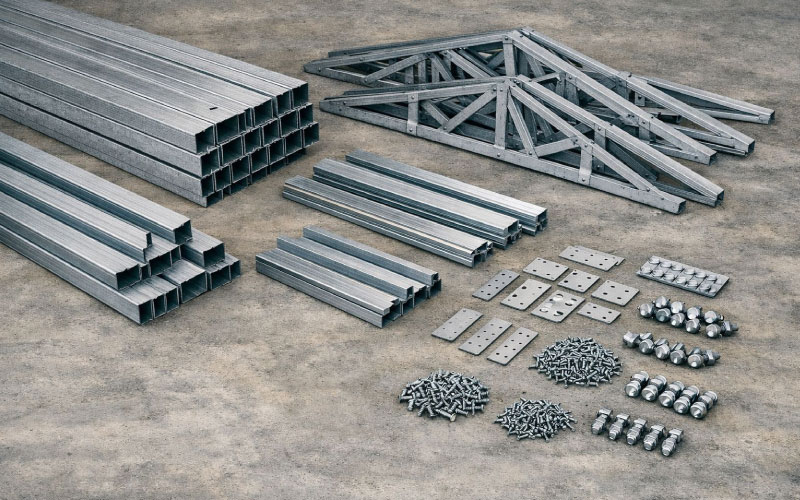
They are governed by a set of internationally recognized standards that ensure structural safety, performance, and durability. These standards provide guidance for design, manufacturing, and installation, and vary depending on regional regulations. The following are the most widely used and important references in the industry.
- AISI S100 (American Iron and Steel Institute): North American specification for the design of cold formed steel structural members, including steel stud framing applications.
- AISI S240: North American standard for cold-formed steel structural framing.
- EN 1992-1-3 (Eurocodes 3): Design of steel structures / Cold-formed members and sheeting.
- CSA S136 (Canada Standards Association): North American specification for the design of cold-formed steel structural members.
- AS/NZS 4600 (Australia/New Zealand): Cold-formed steel structures standard
CHOOSE A LIGHT GAUGE STEEL FRAMING SUPPLIER
Newinds can provide cold formed steel framing adaptable for all types of applications, made with steel resistant to all types of environments and tailored. In addition to steel stud framing, Newinds offer different types of metal components manufactured from materials such as carbon steel, stainless steel, and alloy steel that meet international standards. These materials provide optimal strength, durability, fire resistance, and corrosion resistance, making them especially suitable for use in demanding commercial and industrial environments.
Contact Newinds:
- Email: sales@newindscorp.com
- Phone/Whatsapp/Zalo: Ann Yen +84 344 644 077