
Due to their outdoor installation, where they are constantly exposed to harsh weather conditions and impacts from vehicles, steel bollard maintenance is essential and must be carried out regularly and thoroughly to ensure the bollards continue to function effectively.
WHY IS REGULAR STEEL BOLLARD MAINTENANCE IMPORTANT?
Most steel bollards today are manufactured from high-strength steel, mild steel, stainless steel, or protected with galvanised steel coating. However, because they are mainly installed outdoors in industrial environments, they are directly affected by moisture, sea salt, scrapes and collisions from moving vehicles, chemicals, and cleaning agents. These factors easily cause paint peeling and rusting, gradually making the bollard brittle, prone to breakage or collapse.
WHAT HAPPENS IF YOU NEGLECT STEEL BOLLARD MAINTENANCE?
- Surface rust reduces the thickness of the steel, gradually diminishing its load-bearing capacity and making it prone to breaking or falling even under light impact.
- Peeling paint leads to loss of aesthetic appeal for both the bollard and the overall project.
- Frequent collisions cause the bollard to easily bend and deform, and can crack the concrete foundation, especially with fixed steel bollards, standard steel bollards, and steel pipe bollards.
- Accumulation of dust and debris trapped in the bollard’s surface gaps creates a moist internal environment, leading to concentrated corrosion in areas where dust builds up.
If these issues are not regularly inspected and maintained, the bollard will gradually lose its load-bearing capacity, fail to operate reliably, and cause high costs for the project.
STEEL BOLLARD MAINTENANCE TIPS
-
Monthly Inspection
Maintenance can be performed monthly through overall visual checks to see if the bollard is bent, tilted, or dented. At the same time, carefully inspect the base of the bollard and the concrete foundation for any signs of cracking or rust.
Early inspection and detection help identify minor issues such as rust spots, paint peeling, leaning bollards, or cracked concrete bases in a timely manner. This allows for prompt and more cost-effective solutions before the problems become serious.
-
Proper Techniques for Cleaning Dirt on Bollards
To clean the bollard effectively without compromising its quality, you must first identify the type of dirt or contamination and then apply the appropriate cleaning method.
For common dirt such as dust, sand, mud, dry leaves, grass, spider webs, etc., you can handle it by:
- Using a soft cloth or soft-bristled brush to wipe away dirt around the bollard and rinse with clean water.
- Mixing warm water with neutral soap and wiping clean with a soft cloth or soft sponge.
- Rinsing again with clean water and drying the bollard completely.
- For industrial grease, asphalt, rubber, paint stains, adhesive residue, etc., you can handle it by:
- Using specialized metal cleaners to clean the bollard, using a soft cloth or nylon brush.
- Rinse with clean water after cleaning is complete.
However, avoid using overly strong solvents as they may damage the paint or coating layer.
-
Repairing Minor Damage
During use, bollards may suffer damage from vehicle collisions or environmental and weather impacts. Even if there is no major damage, there may be early signs of minor internal issues such as surface scratches, paint peeling, dents from impact, or rust spots.
If the bollard is scratched or the paint is peeling:
- First, clean the affected surface thoroughly.
- Lightly sand the area if necessary.
- Touch up the scratched or peeled area with paint and apply a protective coating.
-
If the bollard has dents
Use specialized tools to reshape the bollard such as rubber mallets, metal forming hammers, hydraulic presses, or pulling and straightening kits. After repair, re-check the structural stability of the steel bollard.
-
Lubrication for Removable Bollards
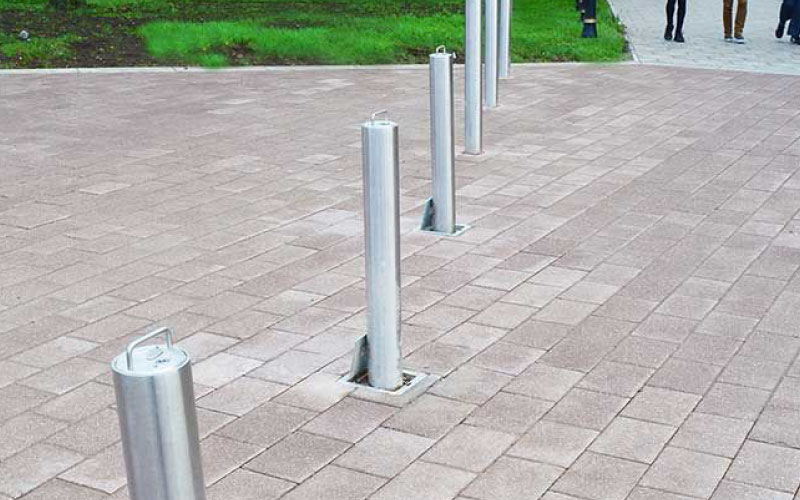
For removable bollards or those with locking mechanisms, regular lubrication is necessary to ensure smooth operation and extend service life. Proper lubrication reduces friction between moving parts, prevents jamming of locks (making removal and installation difficult), and minimizes corrosion caused by moisture and rainwater.
Key areas that need regular lubrication include: locks, hinges, locking pins, bushings, joints, and lifting mechanisms.
-
Repainting & Protective Coating
After a period of use and exposure to the environment and industrial chemicals, the bollard’s color may fade, the paint may peel, or the surface may crack. To solve this effectively, you should:
- Clean the bollard surface to remove dust, grease, and peel off any loose paint or rust.
- Sand the surface to create a smooth base for better adhesion of the new coating. It is recommended to apply a suitable primer
COMMON MISTAKES IN STEEL BOLLARD MAINTENANCE
- Do not use strong cleaning chemicals with high acidity or alkalinity, as they can damage the protective paint layer, cause surface corrosion, and gradually reduce the lifespan of the coating.
- Do not use wire brushes or strong chemicals to clean the bollard, as they can damage the paint finish and galvanised layer.
- Prioritize using clean water for rinsing and always dry the bollard completely after washing.
- If the bollard is hot-dip galvanised, choose paint that is compatible with zinc.
- For stainless steel bollards, when cleaning, wipe along the direction of the grain.
- Do not scrub in circular motions or against the grain.
Regular steel bollard maintenance is the key to ensuring bollards are well protected, operate reliably, and maintain their aesthetic appeal. Whether it is steel bollards, stainless steel bollards, or removable bollards, regular monitoring and maintenance are extremely important to optimize performance and ensure long-term durability.