
Metal components are vital in numerous industries due to their robustness, longevity, and adaptability. Steel, primarily composed of iron and carbon, boasts exceptional tensile strength and superb corrosion resistance, particularly when combined with chromium. The composition of steel can vary, with certain types incorporating additional elements like manganese, silicon, and nickel to augment specific properties.
WHAT ARE METAL COMPONENTS?
Metal components are manufactured parts made from steel alloys that are used in construction, manufacturing, and infrastructure. These components can range from small fasteners to large structural steel beams. The malleability of steel allows for diverse shaping and welding possibilities, rendering it suitable for a broad spectrum of applications.
METAL COMPONENTS FABRICATION METHOD
Metal component fabrication is the process of manufacturing parts and components from raw metals such as steel, aluminum, or copper using various processing methods to create products with the required shape, dimensions, and functions.
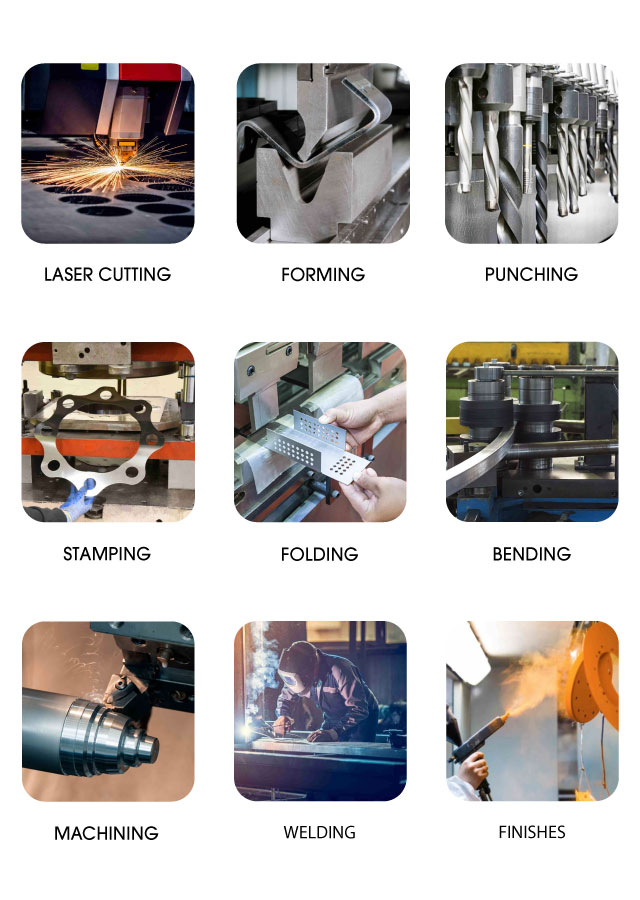
Each method is suitable for different materials, production scales, and technical requirements, and each has its own advantages and disadvantages. Below are the most common methods for manufacturing metal components today:
- Laser cutting
- Forming: suitable for machine housings, covers, tray-shaped and box-shaped metal parts
- Punching: for parts that require mounting holes or components with many round, square, or specially shaped holes
- Stamping: box lids, trays, box bottoms, electrical connectors, automotive parts
- Folding: electrical cabinet enclosures, protective boxes, cable troughs, cable trays, sign frames, light frames
- Bending: handrails, railings, hydraulic pipes, automotive exhaust pipes, U-shaped and C-shaped brackets
- Machining: shafts, gears, pulleys, bearings, molds
- Welding
- Finishes
APPLICATIONS OF METAL COMPONENTS
Metal components are a critical link in the structural systems of construction projects, connecting parts in machinery and production lines, transportation infrastructure, energy systems, and even everyday household appliances.
-
Construction structures and infrastructure
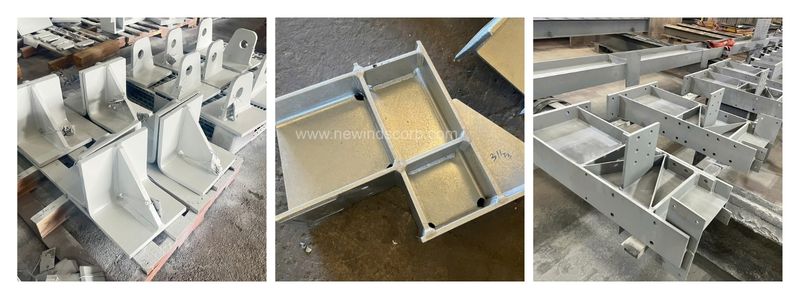
Metal components, particularly steel components, are used to connect parts in construction projects to form complete structural systems, ensuring stability, durability, and safety.
-
Machinery and industrial equipment
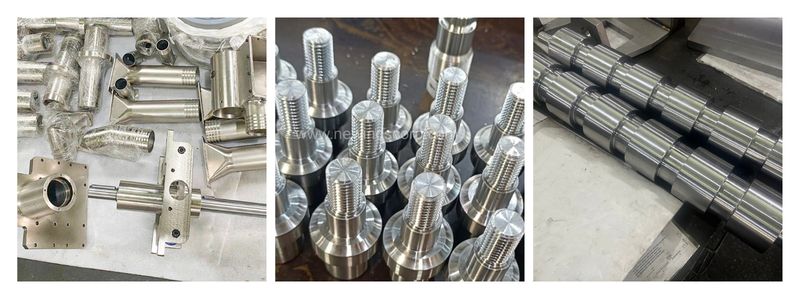
- In industrial production, metal parts are essential for the stable operation of machines, equipment, and production lines. Their roles include:
- Load-bearing and structural functions: frames, machine bodies, machine bases, shafts, crankshafts, connecting rods, gears
- Wear and friction resistance: bolts, nuts, bearings, bushings, sleeves, cams, rollers, cutting blades, stamping dies
- Energy transmission and signal conduction: couplings, conductive bars, contacts, motor housings, pipes, valves, metal pistons
-
Transportation
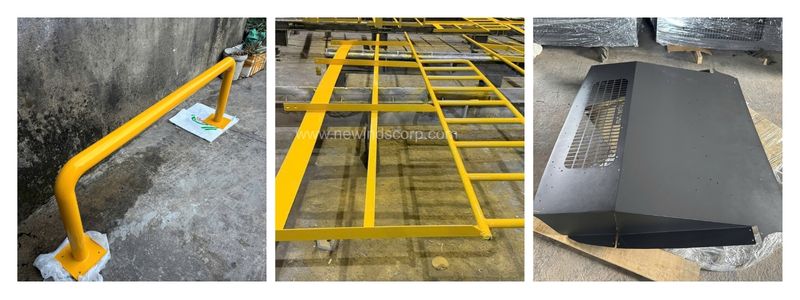
Metal components contribute to the structure and operation of transportation vehicles such as motorcycles, cars, airplanes, as well as transportation infrastructure.
- Components for vehicles: vehicle chassis, car bodies, aircraft fuselages, truck bodies, gearboxes, gears
- Transportation infrastructure: bollards, traffic signs, railings, staircases, handrails
-
Electrical and energy systems
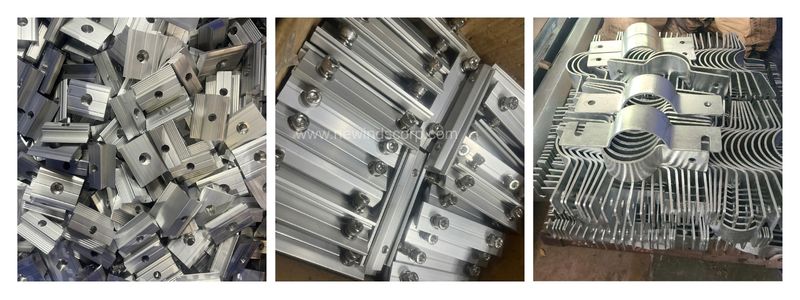
Metal parts are widely used in the installation, fixation, and protection of solar power systems:
- Solar mounting brackets and support structures
- Electrical enclosures, cable trays, and mounting plates
- Pipe supports, clamps, and steel brackets
- Components for power transmission and distribution systems
-
Medical and healthcare equipment
Most medical devices, such as surgical instruments, hospital bed frames, and components for diagnostic machines, are fabricated from metal. In particular, stainless steel is widely used due to its corrosion resistance, durability, and high hygiene standards.
FAQS ABOUT METAL COMPONENTS
1. Which industries do your metal components primarily serve?
Newinds’ products are designed to serve a wide range of industries without limitations. Our customers operate in various sectors, including:
- Construction & Architecture: Pre-engineered steel buildings, steel beams, steel roof trusses, structural frameworks, staircases, etc.
- Automotive & Mechanical Engineering: Trailer chassis, gears, engine components, etc.
- Energy & Utilities: Wind turbine frames, storage tanks, support frames, pipelines, etc.
- Transportation & Logistics: Trailer chassis, shipping containers, bridges, tunnels, etc.
- Oil, Gas & Petrochemical Industry: Stainless steel components for harsh environments.
2. What are the main methods of producing Metal Components?
There components are typically manufactured through methods such as Machining, Casting, Stamping, Rolling, Welding, and Powder Metallurgy. Each method depends on the type of product, material properties, design requirements, and production volume.
3. Besides metal components, what other products do you offer?
Not only does Newinds provide high-quality metal parts, but we also offer a diverse range of other products, our metal fabrication services including steel structures, stainless steel brackets, steel handrails, steel pipes, stainless steel accessories, trailer chassis, and many related products, meeting the needs of customers across various industries.
4. Do your metal parts meet quality standards such as ASTM, EN, or AS/NZS Standards?
With years of experience supplying metal components to customers worldwide (ISO, ASTM, EN, and AS/NZS Standards), Newinds has a deep understanding of the quality standards in each region and applies them to our products. This ensures durability, load-bearing capacity, high performance, and safety in use.
If you are seeking a reliable steel fabricator, delivered with expert consultation and industry knowledge, we welcome the opportunity to discuss your needs.
Contact Newinds today to discuss your requirements
- Email: sales@newindscorp.com
- Phone/Whatsapp: +84 344 644 077