
Stainless steel bump rails are primarily installed in airport terminals, hospital corridors, hotels, commercial kitchens, and other high-traffic areas to protect walls while maintaining a clean, professional appearance. However, not every area requires the same type of bump rail. So, what is the difference between bump rails and crash rails? This article will help you gain a comprehensive understanding of wall protection rails and the key factors to consider when choosing a bump rail manufacturer.
LEARN MORE ABOUT STAINLESS STEEL BUMP RAILS
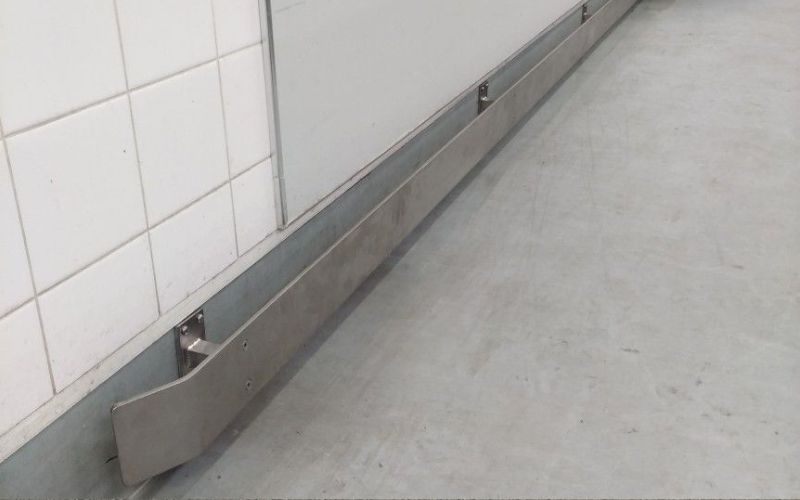
Bump rails are protective rail systems designed to be installed along the base of walls, corridors, machinery, and equipment to protect them from impacts caused by carts, forklifts, hospital beds, material-handling equipment, and pedestrian traffic.
Bump rails can be manufactured from various materials, including:
- Stainless Steel: Commonly used in hospitals, food processing facilities, commercial kitchens, pharmaceutical manufacturing plants, and facilities located in coastal environments due to its excellent corrosion resistance, durability, and hygienic properties.
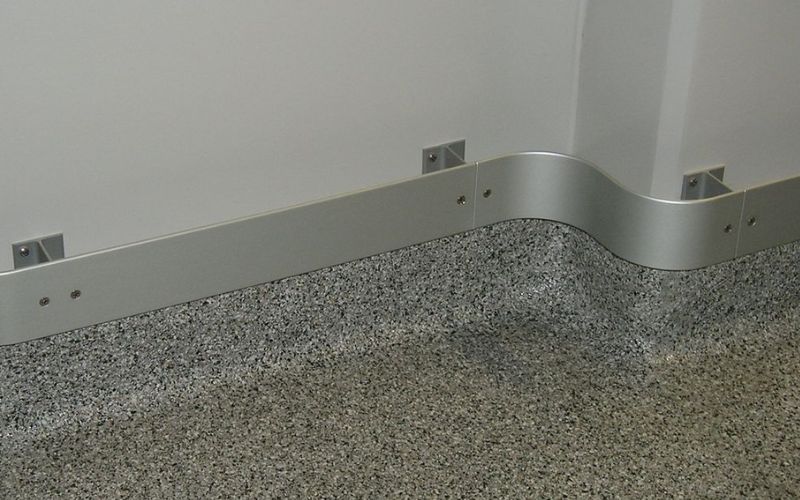
- Aluminum: Suitable for office buildings, hotels, shopping centers, hospital corridors with relatively low impact exposure, and light industrial facilities where lightweight construction and corrosion resistance are important.
- Carbon Steel: Primarily used in industrial environments where high impact resistance and cost-effectiveness are more important than appearance, such as metal fabrication factories, assembly facilities, warehouses, and distribution centers.
- Galvanized Steel: Carbon steel bump rails that are hot-dip galvanized to add a protective zinc coating to the surface, improving corrosion resistance. This makes them suitable for outdoor loading and unloading areas, waste treatment facilities, and industrial warehouses.
- PVC / Vinyl: Unlike the metal materials above, PVC/Vinyl bump rails are mainly designed to absorb a portion of impact energy while complementing the overall interior design.
HOW DO STAINLESS STEEL BUMP RAILS WORK?
Bump rails are installed along walls and corridors with high levels of pedestrian and material-handling traffic, particularly in areas where carts, forklifts, and pallet trucks are frequently used.
When a moving vehicle or piece of equipment impacts the bump rail, the rail acts as a protective barrier that helps reduce direct impact on the wall. The impact load is distributed through the rail profile and transferred to the brackets and anchoring system before reaching the supporting structure. This helps minimize scratches, dents, cracks, and other surface damage to walls, maintain the appearance of the facility, and reduce maintenance and repair costs.
The profile shape of a bump rail has a significant impact on how impact loads are distributed, as well as its stiffness, deformation behavior, and overall protection performance.
COMMON STAINLESS STEEL BUMP RAIL PROFILES
- D-Shaped / Half-Round Bump Rails
- Round / Tubular Bump Rails
- Flat / Plate Bump Rails
- Rectangular / Box-Section Bump Rails
- Custom Stainless Steel Bump Rail Profiles
Each profile offers different levels of stiffness, load distribution, appearance, and suitability for specific installation conditions. Therefore, the appropriate profile should be selected based on the expected impact, installation environment, available space, and required level of protection.
SHOULD YOU CHOOSE STAINLESS STEEL 304 OR 316 FOR WALL PROTECTION RAIL?
Stainless steel 304 is generally suitable for wall protection rails used in:
- Hospitals, clinics, and healthcare facilities
- Hotel corridors
- Food processing facilities and commercial kitchens
- Indoor production areas and warehouses
Stainless steel 316 is recommended for wall protection rails used in more corrosive environments, including:
- Coastal hotels and resorts
- Coastal manufacturing plants and warehouses
- Chemical and pharmaceutical manufacturing facilities
The choice between SS304 and SS316 should be based on the environmental conditions, exposure to corrosive agents, required service life, and project budget.
ARE BUMP RAILS AND CRASH RAILS THE SAME?
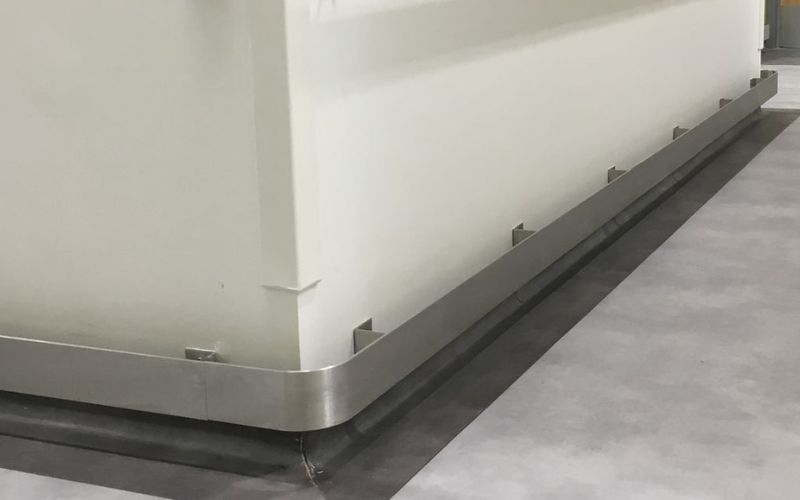
In practice, bump rails and crash rails can refer to similar wall protection systems designed to protect walls and other vulnerable areas from impact while helping minimize maintenance and repair costs.
Key Similarities
- Are protective rail systems installed near or on walls, columns, machinery, and equipment to protect against impact.
- Distribute and transfer impact loads through the overall system, including the rail profile, brackets, and anchors, before the loads reach the supporting structure.
- Are commonly used in airports, hospitals, manufacturing facilities, food processing plants, warehouses, and other high-traffic environments.
Although the two terms are sometimes used interchangeably because they have similar construction, functions, and applications, some technical contexts distinguish between them based on their intended level of impact protection.
Key Differences
| Criteria | Bump Rails | Crash Rails |
| Primary function | Protection against regular or moderate impacts | Protection against heavier impacts |
| Typical size | Generally higher, approximately 10–20 cm (4–8 inches) | Generally lower, approximately 3–10 cm (1.5–4 inches) |
| Typical impact sources | Carts, trolleys, and small to medium pallet trucks | Forklifts, pallet trucks, and industrial vehicles |
| Anchoring requirements | Depends on the installation area and expected impact | Typically requires a more robust mounting and anchoring system |
PROFESSIONAL STAINLESS STEEL BUMP RAIL MANUFACTURING SERVICE
Newinds provides metal fabrication services for customers worldwide, supporting projects of all sizes. With years of experience manufacturing building safety & access products, including balustrades, access ladders, handrails & staircases, tactiles, bump rails, structural stairs, chain wire mesh, bollards, skirting, bumper rails, and corner guards, we are committed to delivering products that meet the technical specifications and requirements of each project.
In addition to standard bump rails with fixed profiles and dimensions, Newinds offers site-specific custom fabrication to accommodate the specific applications and installation conditions of each project. From prototype production to high-volume orders, our team maintains strict control throughout every stage of the manufacturing process to ensure the durability, dimensional consistency, and quality of our stainless steel bump rails.