
Custom steel brackets, with designs ranging from simple to complex, play a crucial role in supporting and connecting various structures and equipment. Their diverse shapes enable them to perform corresponding technical functions. Discover the production methods, materials used, and the wide range of applications for these steel components.
WHAT ARE STEEL BRACKETS?
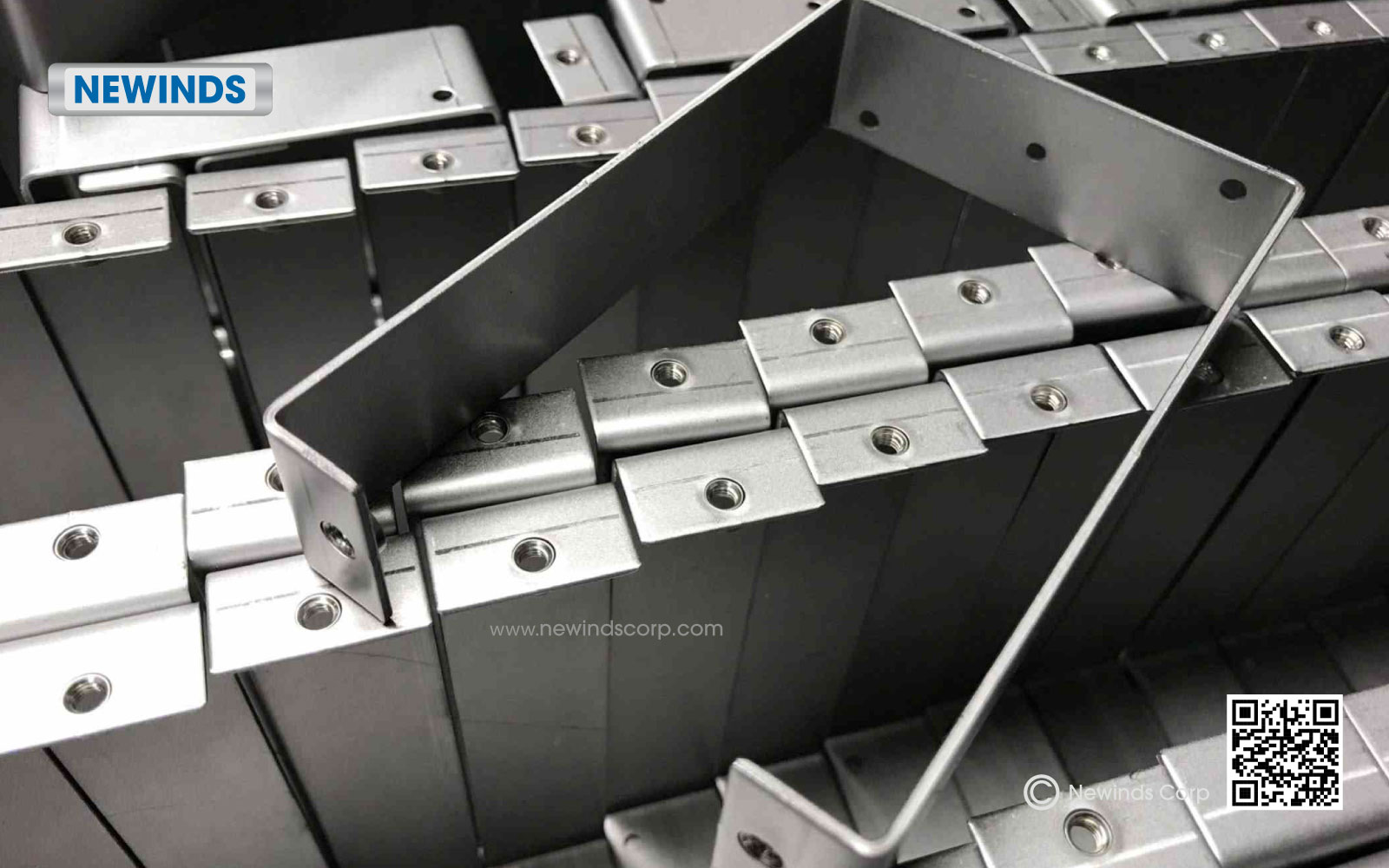
A steel bracket is a steel connector designed to meet specific shape, size, and strength requirements to connect or support various devices and structures.
-
Material
Depending on the functional requirements, corrosion resistance, and the usage environment, steel framing brackets can be made from Cold Rolled Steel, Galvanneal, Stainless Steel Bracket, Aluminum, Copper, Alloy Steel, and Galvanized Steel.
-
Manufacturing method
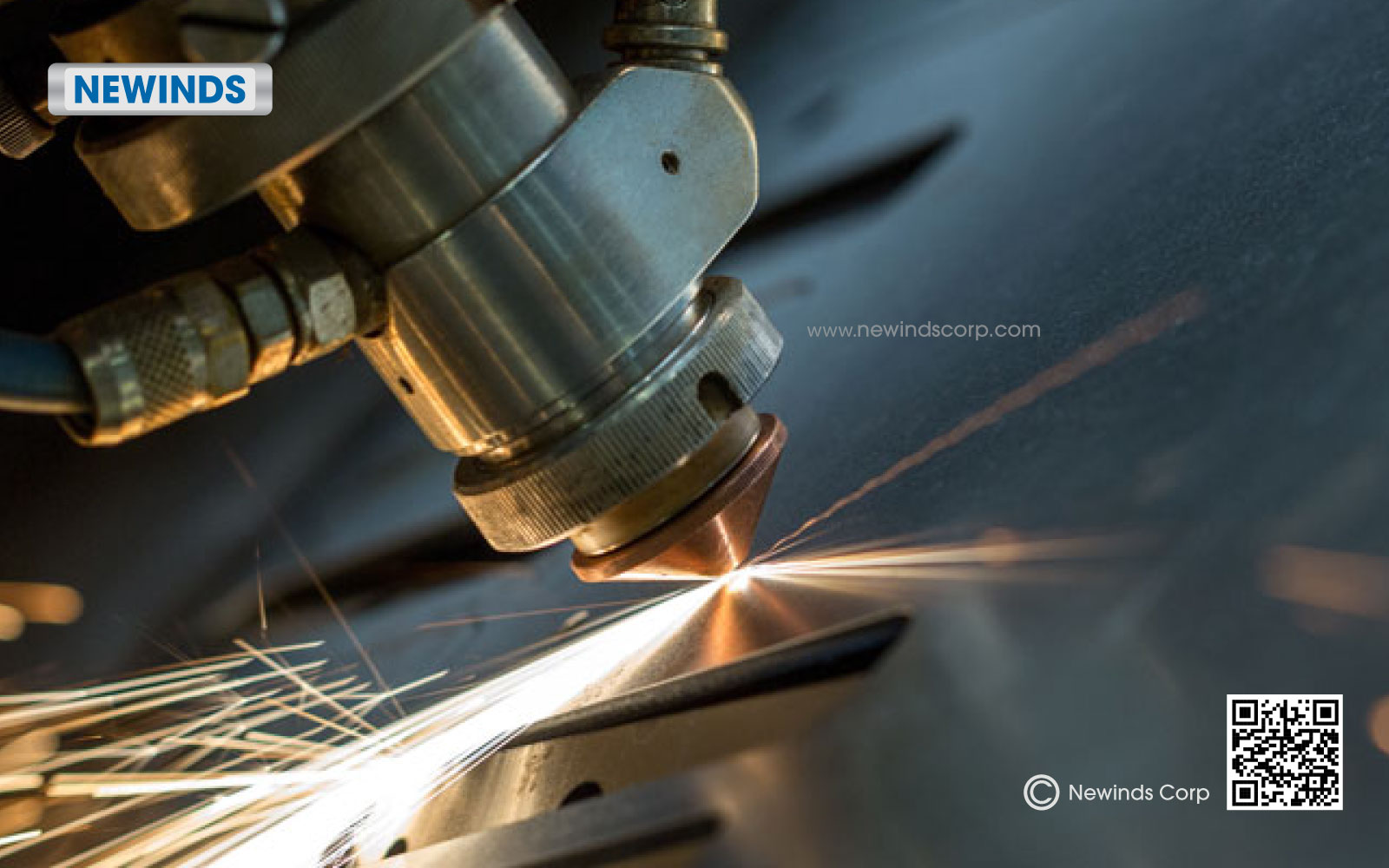
In general, steel brackets are quite versatile, durable, and sturdy, making them applicable in many fields such as construction, interior design, machinery, electronics, transportation infrastructure, and more. This product can be produced using various methods, including CNC machining, casting, and metal stamping.
TYPES OF STEEL BRACKETS
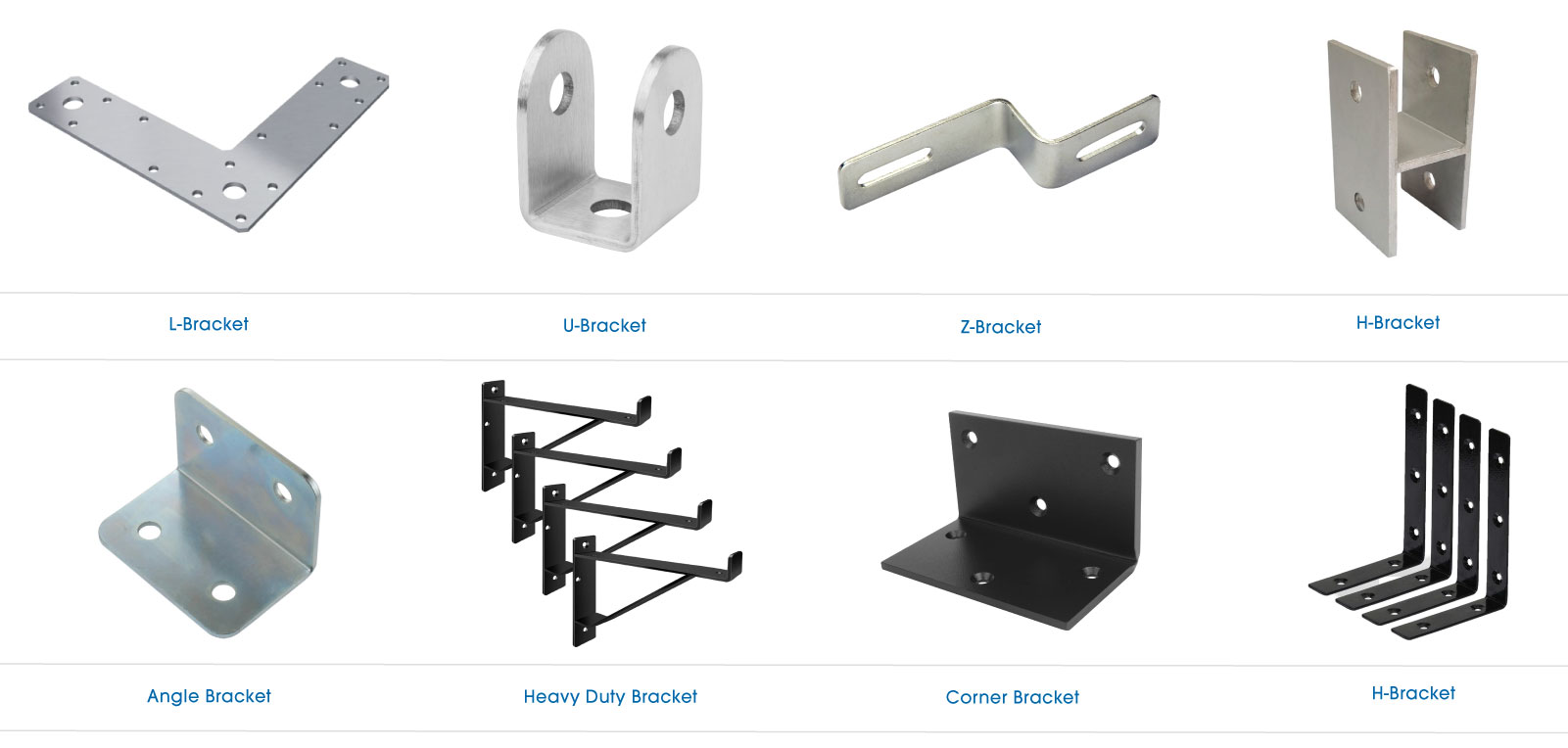
With many years of experience in producing steel framing brackets, Newinds can provide a wide range of metal fabrication services. Below are the popular types of steel brackets chosen by our partners and customers when working with us:
- L-Bracket: Primarily used to connect perpendicular surfaces, providing robust support for components and structures, such as connecting a wall to a floor or ceiling.
- U-Brackets: Capable of surrounding or cradling objects; used to secure pipes, cables, or wires.
- Z-Bracket: Consists of three main sections that are bent or folded, forming a structure with sharp angles or edges.
- H-Brackets: Designed in the shape of the letter “H” to enhance sturdiness and stability, especially when supporting heavy loads.
- Angle Bracket: Features a right-angle shape (usually 90 degrees) with holes for screws or bolts; can be designed with one or multiple fixed holes.
- Heavy-Duty Brackets: With increased thickness and high load-bearing capacity, they typically have a more robust structure compared to standard brackets.
- Corner Brackets: Smaller in size and commonly used to connect the small corners of various components.
- Wall Bracket: Used for mounting on walls to hang items or support shelving.
They are also commonly used as mounting brackets, offering dependable solutions for securely fixing components, equipment, and structural elements to walls, floors, or supporting frames across various applications.
HOW TO CHOOSE SUITABLE STEEL BRACKETS
Based on the requirements for shape, size, functionality, load-bearing capacity, and the usage environment, Newinds will propose a custom solution that effectively meets your project needs. Specifically:
-
Material
Carefully consider the type of material used to manufacture metal brackets to ensure it meets the requirements for durability, strength, and corrosion resistance.
-
Purpose and Function
Analyze the intended use to determine the correct type of steel bracket that offers adequate load-bearing capacity, precise connection, and overall stability and safety for the structure.
-
Size and Shape
The shape and dimensions must be compatible with the equipment or structure it will be attached to.
-
Environment
Choose a material that can withstand the weather conditions at the installation site, such as moisture resistance and corrosion resistance.
THE ROLE OF STEEL BRACKETS IN CONSTRUCTION
Steel brackets can be found in everyday small-scale residential applications such as wall shelves, bookshelf supports, and cabinet frame fixings, as well as in heavy industrial projects such as supports for MEP systems, cable tray supports, conveyor bases, and more.
Load Distribution and Structural Support
This is the most important role of steel brackets, as they are used to support and evenly distribute loads throughout the structural system, including beams, columns, walls, floors, and steel trusses. With the use of brackets, loads are distributed evenly across the entire structure instead of being concentrated at a single fixed point.
Support for Secondary Systems
In addition to supporting primary structures, brackets also play an important role in the installation and reinforcement of secondary systems such as piping systems, cable trays, solar panel supports, handrails, guardrails, and HVAC systems.
Connecting Different Types of Materials
The combination of different materials within the same construction project is becoming increasingly common. To ensure effective integration, steel brackets serve as the intermediate connection component between these materials. Common applications include connecting steel to brick/concrete structures or connecting wood to concrete systems.
WHY CHOOSE NEWINDS TO FABRICATE STEEL BRACKETS?
We specialize in a variety of steel brackets suitable for any industry. Our suite of services is comprehensive, including but not limited to:
- Laser Cutting
- Forming & Punching
- Stamping & Folding
- Bending & Machining
- Welding & Finishing
- Value-Added Services such as sourcing in castings, plastics, rubber, and more.
With a team of experienced experts in supplying a wide variety of steel brackets to numerous partners and customers worldwide, Newinds offers high-quality metal bracket solutions that comply with international standards such as ASTM Standards, AS/NZS Standards, EN Standards, among others.
As a supplier of custom steel fabrication solutions, Newinds always places the customer’s core requirements at the heart of our product and service offerings. Consequently, our services go beyond merely establishing a partnership, opening up long-term business development opportunities for both parties.
If you need a high-quality steel bracket fabricator offering tailored metal solutions that meet international standards.
Contact Newinds:
- Email: sales@newindscorp.com
- Phone/Whatsapp/Zalo: Ann Yen +84 344 644 077