
Stainless steel pipe clamps ensure your pipes are securely and precisely installed for seamless operation. However, with the wide variety of pipe clamps available, choosing the most suitable one for your project can be challenging. In this article, we’ll guide you through the differences and help you select the optimal pipe clamps for your upcoming project.
WHAT ARE STAINLESS STEEL PIPE CLAMPS?
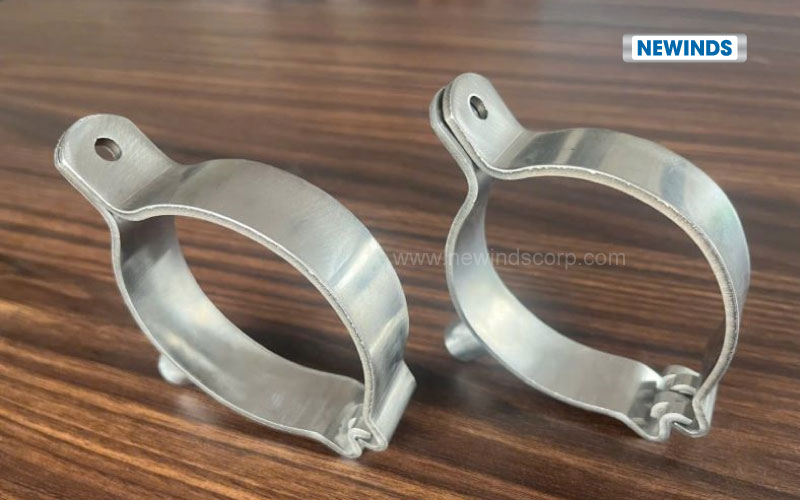
Stainless steel pipe clamps are components made from stainless steel designed to securely fasten pipes to walls, ceilings, or other surfaces. These devices are widely used in industries such as plumbing, oil and gas, food processing, HVAC, and chemicals.
For harsh environments, Newinds recommends stainless steel pipe clamps to ensure durability, hygiene, and safety during use.
HOW DO PIPE CLAMPS WORK?
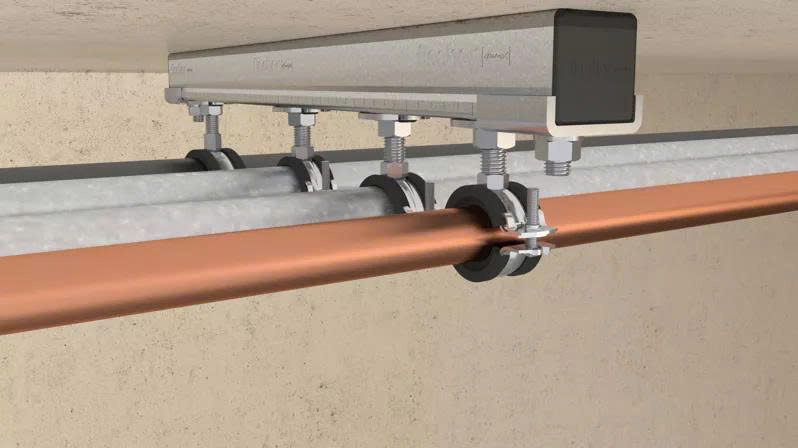
Pipe clamps work by encircling the pipe and anchoring it to a fixed surface. Typically, a clamp consists of two halves bolted together, creating a firm grip around the pipe. This design ensures the pipe remains securely in place while allowing slight adjustments during installation. Some clamps, such as heavy-duty pipe clamps, are reinforced to withstand higher loads or accommodate larger pipes, making them suitable for demanding applications.
STAINLESS STEEL GRADES FOR PIPE CLAMPS
Today, stainless steel pipe clamps are primarily manufactured from Stainless Steel 304 and Stainless Steel 316, including:
- Stainless Steel 304: Suitable for indoor and outdoor environments under normal weather and operating conditions, such as clean water supply and drainage systems, industrial treated water systems, and fire protection systems.
- Stainless Steel 316: Ideal for applications in coastal areas, chemical processing plants, swimming pools, and saltwater systems due to its superior corrosion resistance.
TYPES OF PIPE CLAMPS
1. U-Bolt Pipe Clamps
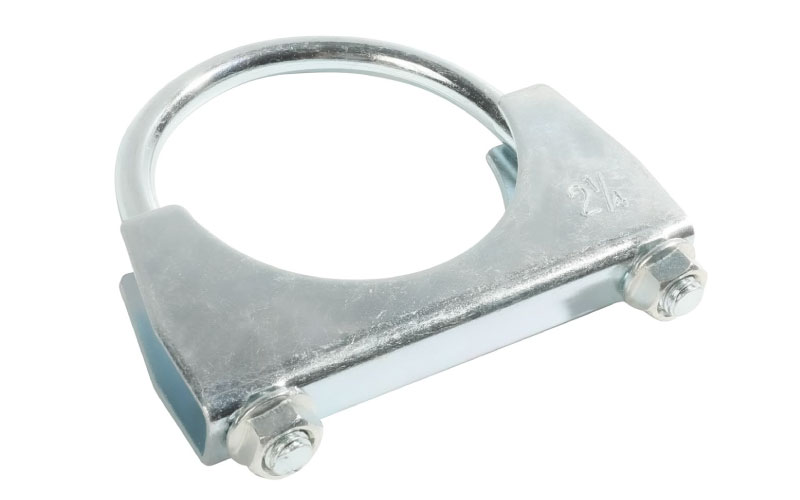
U-bolt pipe clamps are mechanical fastening components shaped like the letter “U,” providing a larger contact surface area to distribute loads more evenly. The threaded ends are combined with nuts and mounting plates, ensuring secure fixation and enhanced load-bearing capacity.
This design makes U-bolt pipe clamps ideal for water supply and drainage systems, mechanical piping networks, pipe support structures, and various industrial applications.
2. Rubber-Lined Pipe Clamps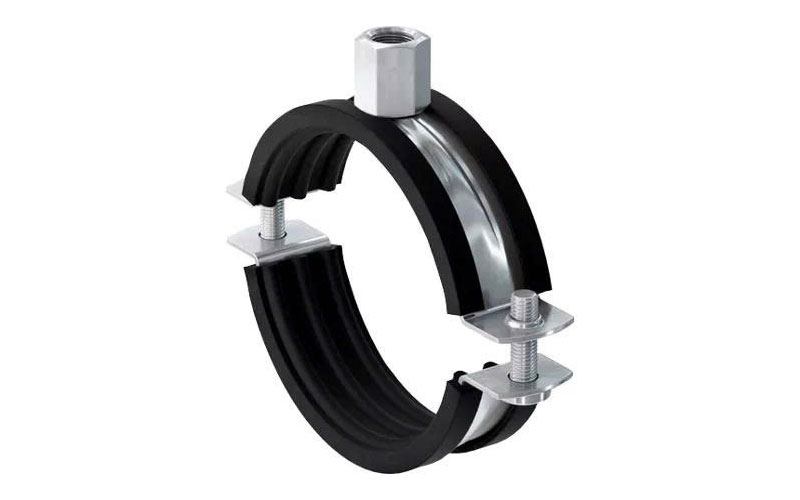
Rubber-lined pipe clamps feature an internal rubber or EPDM lining that helps reduce vibration and protects the pipe surface from scratches and damage.
The cushioning layer effectively minimizes vibration and noise, making these clamps particularly suitable for piping systems exposed to continuous movement or vibration.
3. Heavy-Duty Pipe Clamps
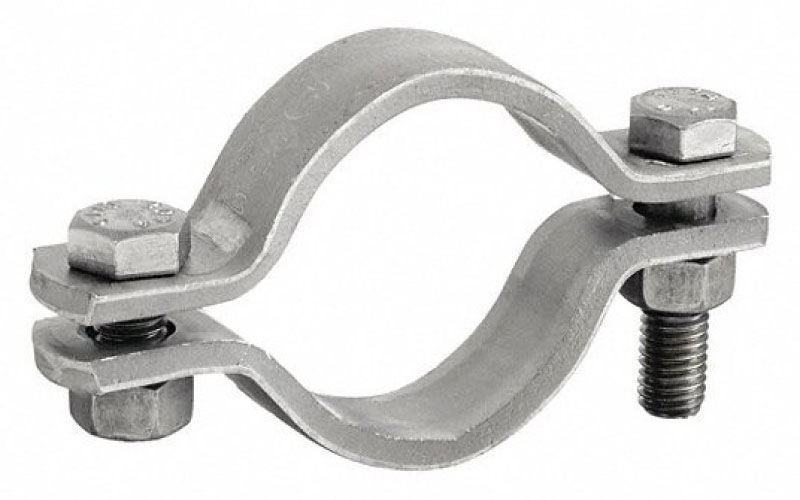
Heavy-duty pipe clamps are designed with thicker clamp bodies, larger bolts, and heavier nuts compared to standard pipe clamps, allowing them to withstand significant compressive and tensile loads without deformation.
Common frame thicknesses include:
- Heavy-Duty Saddle Clamps / Two-Piece Pipe Clamps typically used for industrial piping: Steel band thickness: 6–10 mm
- Heavy-Duty Riser Clamps / Plate Clamps commonly used for supporting heavily loaded vertical pipes: Plate thickness (T): 12.7 mm – 25.4 mm (equivalent to 1/2″ – 1″)
In practice, there is no universal standard thickness because it depends on several factors:
- Pipe diameter (ranging from 15 mm to over 300 mm)
- Load requirements
- Applicable standards (such as DIN 3015, MSS SP-58, AS/NZS, etc.)
4. Saddle Clamps
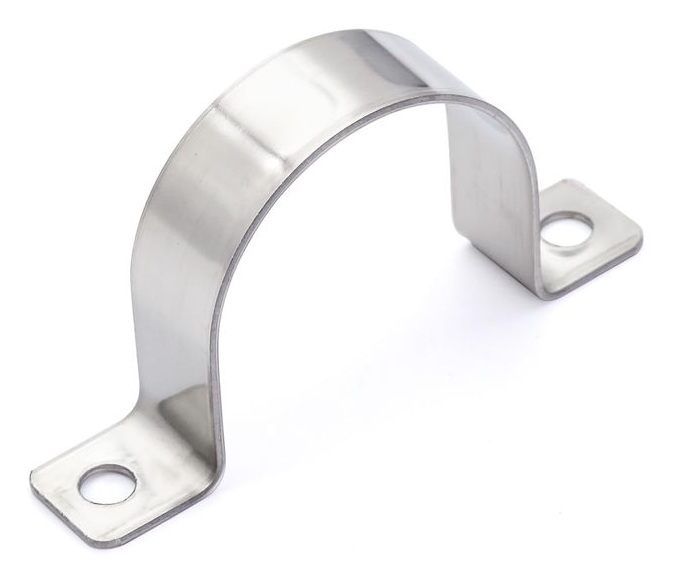
Saddle clamps are pipe fastening accessories designed with a saddle-shaped profile that wraps around the upper portion of the pipe, securing pipes, cables, and other cylindrical components firmly in place.
SHOULD YOU CHOOSE PIPE CLAMP OUTSOURCING IN VIETNAM?
Vietnam has become one of the most attractive destinations for companies looking to diversify and expand their metal fabrication supply chain, particularly for products such as stainless steel pipe clamps. The country’s metal fabrication industry offers several significant advantages:
Competitive Manufacturing Costs
Compared to many neighboring countries, Vietnam provides more competitive overall production costs due to:
- Competitive labor costs (typically 20–30% lower than Thailand and China)
- Lower operating expenses
- Government policies that support manufacturing and foreign investment
A relatively stable geopolitical environment
These advantages help buyers reduce procurement costs while diversifying supply sources instead of relying solely on traditional markets that may face economic or geopolitical uncertainties.
Strategic Location for International Shipping
Many fabrication facilities in Vietnam are located near major industrial and export hubs, enabling efficient worldwide shipping.
Southern Vietnam: Ho Chi Minh City, Dong Nai, Binh Duong, Ba Ria–Vung Tau
With access to major ports such as: Cat Lai Port, Tan Cang Port, Saigon Port, Cai Mep–Thi Vai Port
Northern Vietnam: Hanoi, Bac Ninh, Hai Phong, Bac Giang, Hung Yen
With convenient access to: Hai Phong Port, Quang Ninh Port, Other major northern port clusters
Skilled Fabrication Capabilities & Modern Equipment
Many Vietnamese fabrication companies currently supply products to developed markets with strict technical and quality requirements. As a result, numerous manufacturers possess the expertise necessary to produce high-quality stainless steel pipe clamps that meet international standards.
In addition, these factories have invested heavily in advanced machinery and modern production technologies to optimize manufacturing efficiency, precision, and quality control.
REPUTABLE PIPE CLAMP SUPPLIERS IN VIETNAM
- Newinds Corporation
- ABE Industrial Vietnam Co., Ltd.
- WIN-VIET Precision Machinery Company Limited
- Cat Van Loi Industrial Electrical Equipment Co., Ltd.
- MISUMI Vietnam Company Limited
FAQS ABOUT PIPE CLAMPS
-
What is the best material for pipe clamps?
The best material depends on the application. For environments with high humidity or chemicals, stainless steel pipe clamps are ideal due to their corrosion resistance. For indoor settings with low corrosion risk, carbon steel or galvanized clamps may suffice.
-
How do I choose the right size for a pipe clamp?
Measure the outer diameter of the pipe and select a clamp that matches this size. Alternatively, contact a reputable pipe clamps supplier for a sizing chart and expert advice to ensure a perfect fit.
-
How do I install a pipe clamp?
To properly install a stainless steel pipe clamp, measure and mark the pipe’s fixing position, drill holes, attach the lower half of the clamp to the surface, place the pipe in position, attach the upper half, and tighten the bolts securely.
-
What are common mistakes to avoid when using pipe clamps?
Common mistakes include selecting the wrong size, overtightening and deforming the pipe, or neglecting periodic inspections, which can lead to loosening.
-
Are pipe clamps the same as pipe fasteners?
Pipe clamps are devices that secure pipes in place, while pipe fasteners refer to bolts, screws, or other fittings used to connect or secure pipes.
CHOOSING A RELIABLE STEEL PIPE CLAMP SUPPLIER
Newinds offers a wide range of pipe clamps, customized to meet your specific technical requirements. We provide pipe clamps in various sizes and materials, with stainless steel pipe clamps being a popular choice for many clients.
With global experience in fabricated metal works, we deliver high-quality products at competitive prices, fully compliant with AS/NZS, EU, US standards and more.
If you need a high-quality pipe clamps supplier offering tailored metal solutions that meet international standards.
Contact Newinds:
- Email: sales@newindscorp.com
- Phone/Whatsapp/Zalo: Ann Yen +84 344 644 077