
Structural steel is an essential component of modern construction and serves as the foundation for everything from small residential projects to large-scale commercial developments. Regardless of how it is applied, understanding steel structure is extremely useful if you work in or are interested in the construction industry.
WHAT IS STRUCTURAL STEEL?
Structural steel is a metal alloy designed and fabricated specifically for use as a construction material. It offers exceptional strength, high load-bearing capacity, flexibility in design, and fast installation, allowing projects to be completed more efficiently. Thanks to these advantages, this material has become a key material in factories, pre-engineered buildings (PEB), high-rise buildings, bridges, stations, airports, and various industrial and infrastructure projects.
In terms of composition, construction, grade steel contains both iron and carbon. The higher the carbon content, the higher the yield strength, meaning it becomes less ductile and less capable of bending or deforming under applied pressure.

MAIN TYPES OF STRUCTURAL STEEL
- I-Beam / H-Beam, Wide Flange Beam (I200, I300, H250x250, H350x350, …): Excellent bending and compression resistance, ideal for primary columns and beams
- C-Channels: Lightweight and commonly used for purlins and secondary framing
- Angles: Used in bracing and connections to increase overall structural stiffness.
- Hollow Sections (SHS / RHS / CHS): Square, rectangular, or circular tubes typically used for columns, trusses, and architectural frames
- T-Beams: Applied in floors, bridges, and support systems
- Plates: Used for base plates, flooring plates, splices, flanges, and box-girder components
- Structural Trusses: Roof trusses, floor trusses
ADVANTAGES AND DISADVANTAGES OF STRUCTURAL STEEL
Advantages
- High strength and ductility
With excellent load-bearing capacity, structural steel allows buildings to withstand large forces. Its ductility enables the material to deform rather than fail suddenly, an important feature for blast-resistant structures or buildings requiring high-impact resistance.
- Lightweight
Compared with concrete or timber, steel structure is lighter, reducing foundation loads, piling requirements, and ground improvement costs. This can reduce foundation expenses by 50–60%.
For projects on weak soil, rapid schedules, or future expansion/relocation needs, steel structure is the optimal choice.
- Faster construction and lower labor cost
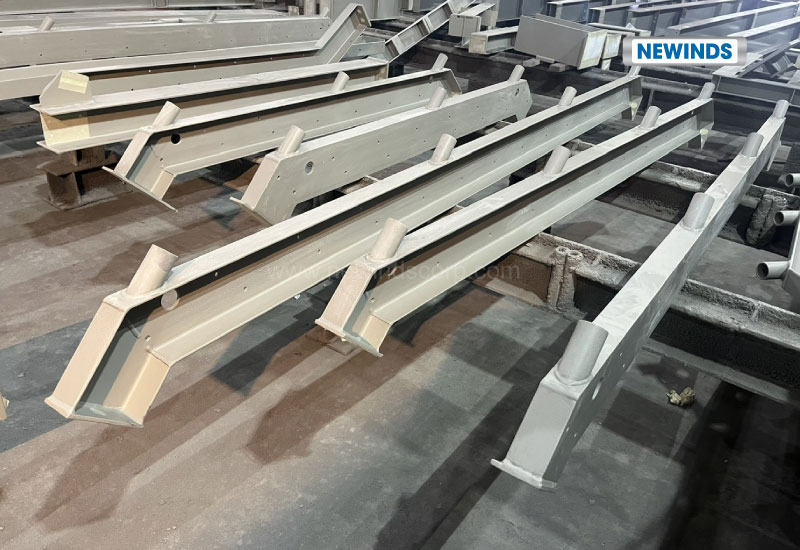
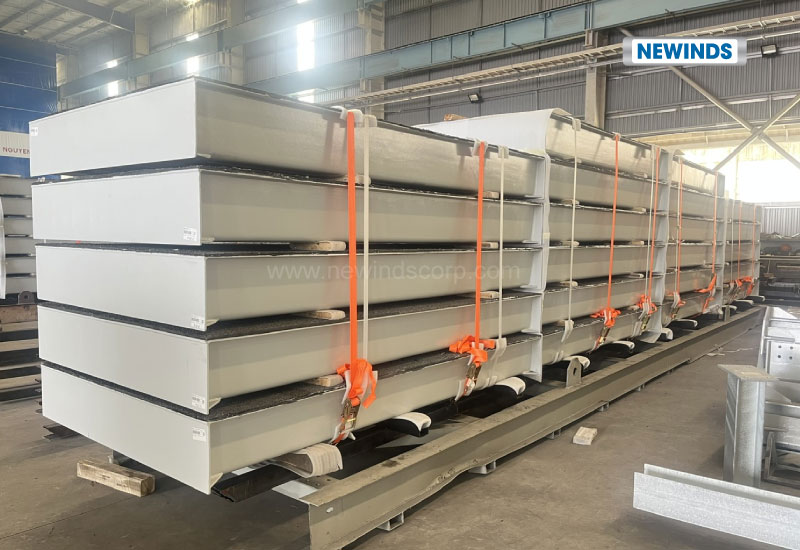
Steel structure is fabricated by a structural steel fabricator under controlled factory conditions. When delivered to site, erection can begin immediately without waiting for curing time, as with concrete.
This reduces project schedules by 30–50% and lowers labor costs by 20–40%, allowing investors to put the building into operation sooner.
- High flexibility
Pre-engineered steel buildings can be expanded, upgraded, or disassembled for reuse. This is especially beneficial for FDI enterprises that frequently modify or upgrade their facilities.
Disadvantages
- Requires regular maintenance
Steel is prone to corrosion, especially in coastal environments. Regular inspections, repainting, or galvanizing are necessary to extend lifespan to 50–100 years.
- Requires skilled labor
Proper fabrication, welding, and installation demand experienced workers. This may increase initial costs for small projects or in areas where steel structure expertise is limited.
- Reduced strength at high temperatures
At temperatures above 550°C, steel begins to lose strength, leading to deformation or collapse if unprotected. Solutions include intumescent paint, concrete encasement, or gypsum cladding.
APPLICATIONS OF STRUCTURAL STEEL
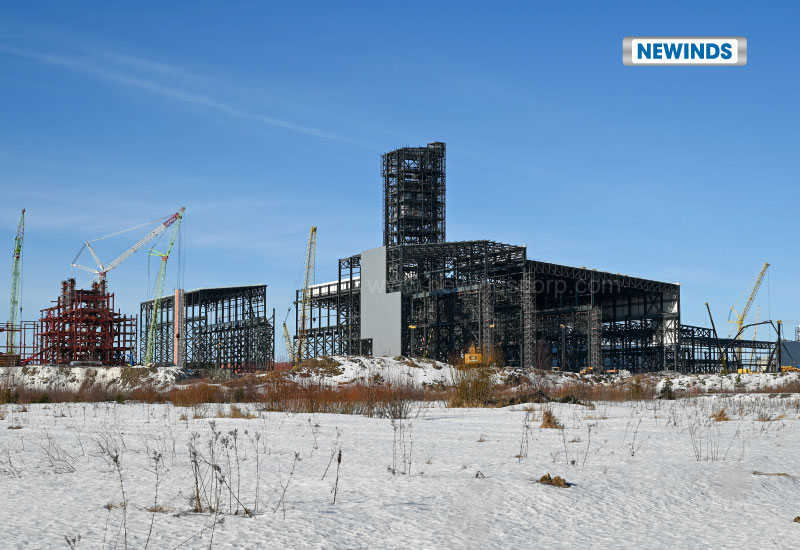
- Factories, warehouses, PEB buildings: Columns, rafters, beams, floor beams, crane beams, steel roof trusses
- High-rise buildings & shopping malls: Columns, beams, composite floors, wind bracing, seismic bracing
- Infrastructure: Box girders, steel bridges, mechanical platforms
- Special structures: Scaffolding, stations, airports, piping platforms, architectural steel structure systems
STRUCTURAL STEEL FABRICATION PROCESS
Step 1: Design
Includes determining project requirements and creating detailed drawings using Tekla Structures, AutoCAD, or Revit. Key factors include loads, steel grade, allowable stress, deformation, overall stability, local buckling, welds, bolted steel connections, corrosion protection, and structural interaction.
Step 2: Material selection
Materials must be verified for origin, yield strength, ductility, and chemical composition.
Step 3: Cutting and Drilling
Raw steel is cut according to drawings and drilled for connections. CNC plasma or laser cutting achieves ±0.5 mm accuracy. Any error here can lead to misalignment and delays during site erection.
Step 4: Bending and Forming
Steel is bent or shaped to create curved beams or arches. Large structural steel fabricators often use BIM to control tolerances to ±1 mm.
Step 5: Welding
Welding connects steel components using MIG/MAG, TIG, or arc welding following AWS D1.1. Welders must control temperature, travel speed, and weld type for each section.
Step 6: Quality inspection
All components must be checked for dimensions, strength, weld defects, and deformation to ensure safety and performance.
Step 7: Surface treatment and coating
Rust, scale, oil, and contaminants must be removed before applying primer, fireproof coatings, or galvanizing. In coastal areas, coating thickness should be 80–120 μm for optimal protection.
COMPARISON: STRUCTURAL STEEL VS. CONCRETE, TIMBER, AND LIGHT-GAUGE STEEL
| Material | Structural Steel | Concrete | Timber | Light – gause steel |
| Strength & load capacity | Very high | High in compression, low in tension | Medium | Medium |
| Weight | Medium | Very heavy | Light | Very light |
| Construction time | Fast (factory fabricated) | Slow (requires curing) | Fast | Fastest (modular assembly) |
| Fire resistance | Low | Excellent | Low | Low |
| Cost | Medium – high | Medium | Medium | Low |
| Lifespan | 50 – 100 years | 70 – 100 years | 20 – 50 years | 30 – 60 |
COMMON ERRORS THAT CAUSE STRUCTURAL STEEL TO FAIL QUALITY STANDARDS
-
Welding incorrectly and creating weld defects
Failure to follow the Welding Procedure Specification (WPS), improper cooling control, incorrect amperage, welding too fast/too slow, or incorrect torch angles can all lead to cracks, incomplete fusion, burn-through, undercut, porosity, slag inclusion, or misaligned welds.
All these defects compromise the overall quality of structural steel, create safety risks during operation, and in severe cases can result in workplace accidents.
-
Inadequate surface preparation and anti-corrosion treatment
If the surface is not properly cleaned, still has light rust after sandblasting, uses a thin paint layer, applies the wrong coating system, or is not galvanized for structures in coastal environments, corrosion will progress much faster.
This leads to weakened load capacity and faster structural deterioration.
-
Incorrect bolt positioning during erection
Misaligned bolt holes during CNC cutting or drilling, using bolts of the wrong grade, insufficient tightening torque, or misalignment of column/beam centerlines can all cause load eccentricity.
This concentrates stress at weak points, reduces shear capacity, and increases the risk of bolt loosening under vibration.
-
Incomplete or inaccurate drawings
Even a small oversight in the design stages such as missing connection details, not accounting for wind load or seismic load, or failing to integrate MEP systems and sprinkler layouts can cause fabrication errors, incorrect dimensions, or wrong connections.
This leads to project delays, increased labor costs, and material waste.
FAQ
- What is the most common structural steel?
ASTM A36, SS400, and Q235B are the three most widely used steel grades worldwide and in Vietnam.
– Vietnam & Asia: SS400 (JIS G3101) accounts for ~60–70% of steel used in factories and low-rise buildings.
– U.S. & Europe: ASTM A36 (fy = 250 MPa).
– China & large-scale projects: Q235B (fy = 235 MPa).
For modern industrial factories and high-rise buildings, Q355B (equivalent to S355) is now surpassing SS400 and accounts for ~50–60% of new projects (2024–2025) because it offers 45% higher strength while costing only ~12–18% more.
- What is the difference between structural steel and normal steel?
Structural steel is specifically manufactured for primary load-bearing components (columns, beams, industrial frames, bridges, high-rise structures). It has:
– Clearly defined yield strength (235–690 MPa)
– Strictly controlled chemical composition (C ≤ 0.20%, S-P ≤ 0.040–0.050%)
– High ductility (elongation ≥ 20–22%)
– Impact resistance at low temperature (Charpy test at –20°C or 0°C)
– Full traceability and certification (Mill Certificate EN 10204 3.1 or 3.2)
Common grades: SS400, Q235B, Q355B, S275, S355, ASTM A36, A572 Gr.50, etc.
Normal steel (also called mild steel or commercial steel) is typically used for stirrups, bolts, flat bars, accessories, or secondary structures that do not require calculated load-bearing capacity. It often:
– Has undefined or lower yield strength (~200–220 MPa)
– Contains more impurities
– Does not undergo impact testing
– Lacks detailed origin certificates
– Costs 15–30% cheaper than steel.
- What is 3-grade steel?
– Grade 1: Mild steel/commercial steel (Q235, CB240-T used for stirrups, bolts)
– Grade 2: SS400 / Q235B / A36 (fy = 235–250 MPa)
– Grade 3: High-strength structural steel (HSS) from 460–690 MPa (S460, Q460, A572 Gr.50+)
- How long does structural steel last?
Lifespan depends on application, environment, and maintenance frequency:
– Indoor / enclosed factories: 50–80 years
– Outdoor / inland environment: 30–50 years
– Coastal areas: 10–25 years
– Chemical plants / severe corrosion: 5–15 years
- Which is better, S275 or S355?
– For projects under 500 tons or low-rise residential buildings → SS400/S275 is sufficient and more cost-effective.
– For projects over 500 tons, FDI factories, or high-rise buildings → Q355B/S355 is preferred by ~99% of investors due to foundation savings and superior structural performance compared with the relatively small price increase.
If you need a structural steel fabricator offering tailored metal solutions that meet international standards.
Contact Newinds:
Email: sales@newindscorp.com
Phone/Whatsapp/Zalo: Ann Yen +84 868 482 038