Steel framing systems are an optimal choice for constructing a wide range of buildings and structures, providing a strong foundation for social and economic development. Let’s explore why they are important and which types are best suited for specific construction projects.
WHAT IS A STEEL FRAMING SYSTEM?
A steel framing system is a structural framework consisting of columns, beams, and bracing members that are connected together to support the building loads and safely transfer them to the foundation. This system is designed to resist vertical loads, lateral forces, and environmental impacts, forming the primary load-bearing structure of the building.
It is considered the backbone of the entire building as it provides a high load-bearing framework that can support the weight from the upper floors, the roof system, and other factors. As a result, it helps the structure remain steady and stable under external forces, ensuring smooth and safe operations inside.
With its durable structure, flexibility in design, and ability to withstand heavy loads, these systems are widely used in various types of construction projects such as factories, warehouses, industrial buildings, and high-rise buildings.
A steel framing system consists of the following main types of steel:
- Structural steel (hot-rolled steel): H-Beam, I-Beam, Angle steel
- Light gauge steel (cold-formed steel): C-Stud, U-Track, Purlin
- Built-up steel

TYPES OF STEEL FRAMING SYSTEM
1. Clear Span Steel Framing System
A clear span steel framing system is a structural steel system designed without interior columns, using long-span beams, trusses, or arches to maximize usable floor area and operational flexibility. This design creates a spacious, open interior without obstructions from supporting columns.
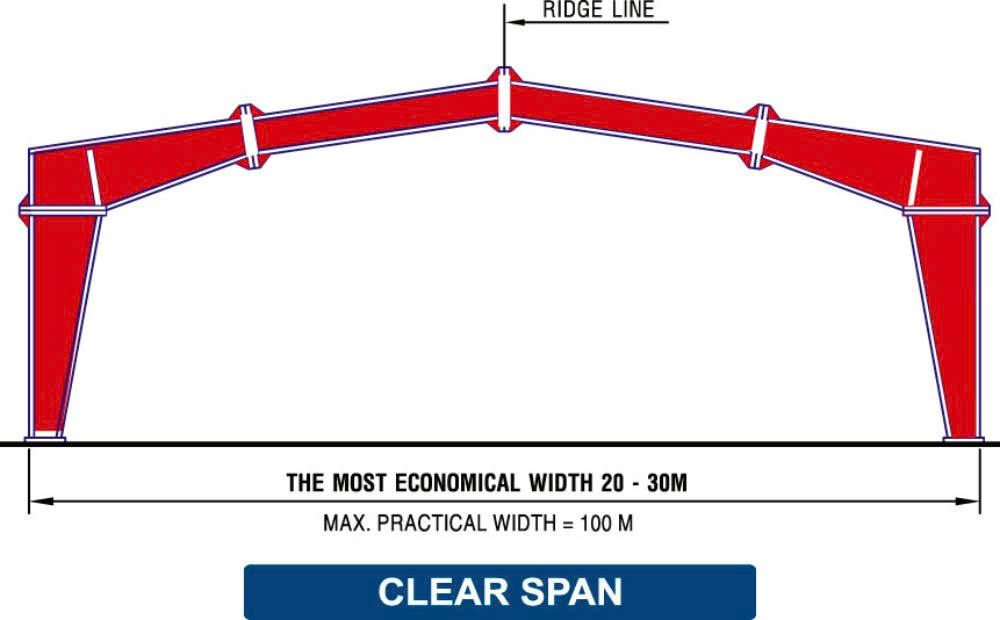
Key characteristics:
- No internal columns
- Long-span structural design
- Optimized space utilization
Suitable for:
- Warehouses and logistics centers
- Manufacturing and industrial plants
- Aircraft hangars and maintenance facilities
2. Multi-Span Steel Framing System
A multi-span steel framing system uses interior columns to divide the building layout into multiple spans, reducing the distance each frame must cover. By distributing loads across multiple spans and columns, this system offers a more cost-effective solution compared to long-span structures.
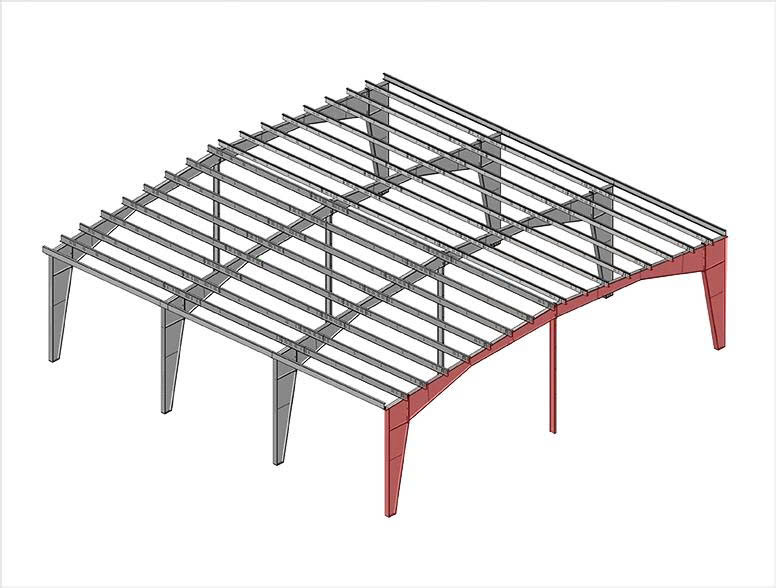
Key characteristics:
- Multiple spans supported by interior columns
- Cost-effective for large buildings
- Efficient load distribution
Suitable for:
- Large-scale warehouses and distribution centers
- Manufacturing and industrial facilities
- Cold storage buildings
- Agricultural and processing buildings
3. Curved Steel Framing System
A curved steel framing system features an arched or curved roof structure that allows loads to be naturally distributed along the frame. This design helps reduce stress concentration and improves resistance to wind and other environmental forces.
In addition, the smooth roof profile of curved steel frames enables efficient water drainage and enhances the architectural appearance of the building.

Key characteristics:
- Arched design that reduces stress on materials
- Meets architectural and aesthetic requirements
- Better performance in harsh weather conditions
Suitable for:
- Industrial buildings in high-wind or harsh weather areas
- Exhibition halls and event venues
- Sports facilities and indoor arenas
4. Multi-Gable Steel Framing System
A multi-gable steel framing system consists of multiple adjacent gable frames sharing common sidewall columns, forming a series of roof peaks across the building footprint.
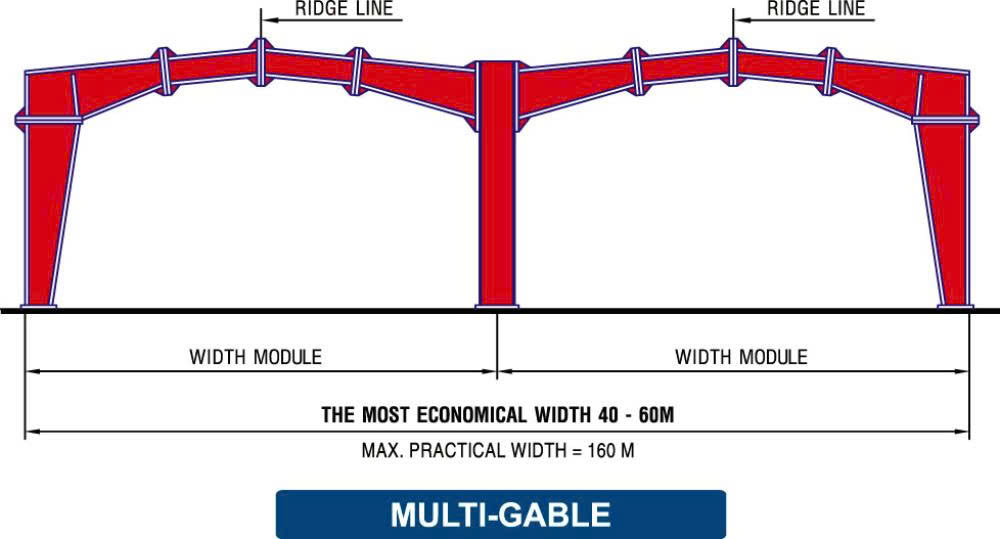
Key characteristics:
- Multiple gable roof sections
- Suitable for wide buildings
- Flexible layout planning
Suitable for:
- Industrial manufacturing complexes
- Logistics hubs and cross-docking facilities
- Sports and recreational facilities
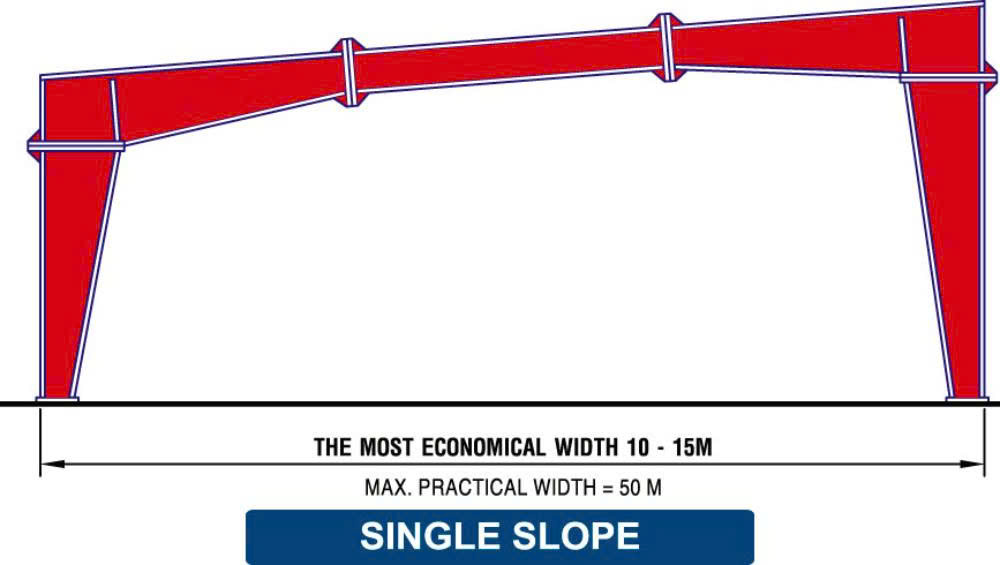
5. Single Slope Steel Framing System
A single slope steel framing system is a structural steel system with a roof sloping in only one direction, typically used for spans under 12 meters. This simple design helps reduce construction time, fabrication and erection costs, and is well-suited for buildings in areas requiring fast and efficient drainage.
Key characteristics:
- One-direction roof slope
- Simple structural design
- Fast fabrication and installation
Suitable for:
- Small to medium industrial buildings
- Storage sheds and utility buildings
- Lean-to extensions and building additions
MAIN APPLICATIONS OF STEEL FRAMING SYSTEM
-
Residential Buildings
Using steel framing in housing construction can save up to one-third of construction time compared to traditional reinforced concrete.
-
Commercial Buildings
Many offices, cafés, restaurants, and shopping centers today tend to choose steel framing because it allows easy expansion of space when needed.
-
Industrial Buildings
This is the most common application of steel framing systems.Most factories, warehouses, and industrial plants are built using steel framing systems.
-
Auxiliary Infrastructure
Steel framing is used for structural frameworks such as:
- Parking structures
- Steel canopies
- Airport and station enclosures
- Sustainability Standards for Steel Framing System
SUSTAINABILITY STANDARDS FOR STEEL FRAMING SYSTEM
- LEED: Steel must meet criteria such as high recycled content, optimized design to reduce material usage, and improved energy efficiency of the building envelope.
- BREEAM: Focuses on life cycle assessment, prioritizing long-term sustainable design and reducing emissions throughout the building’s lifecycle.
- WELL Building Standard: Requires buildings to avoid harmful emissions and use clean materials with good ventilation to protect occupants’ health.
CHOOSE A STEEL FRAME FABRICATOR IN VIETNAM
As a high-quality steel frame fabricator, Newinds has earned the trust of customers around the world for a wide range of projects including pre-engineered buildings, steel sheds, warehouses, and even metal components such as electrical enclosures, machine parts, handrails, chassis trailers, and more.
We have extensive experience supplying products to markets such as the United States, Canada, the EU, Australia, New Zealand, Japan, Thailand, India, and others. All of our clients have been highly satisfied with the quality of our products and services. That’s why choosing Newinds for your custom steel frame fabrication needs will give you greater peace of mind when entering into a partnership with us.
If you need a high-quality steel framing system offering tailored steel solutions that meet international standards.
Contact Newinds:
Email: sales@newindscorp.com
Phone/Whatsapp/Zalo: Ann Yen +84 344 644 077
FAQs
- Is steel framing more expensive than wood framing?
The initial cost may be higher, but in the long term, steel framing is more cost-effective because it is not affected by termites, warping, or cracking like wood framing.
- Can steel framing be used for multi-storey buildings?
Yes. Steel framing systems can be used to construct high-rise buildings such as office towers, hotels, and apartments.
- Are steel frame buildings fire-resistant?
Yes, if proper protective measures are applied from the beginning.
In reality, steel does not burn; however, under prolonged high temperatures, it gradually loses its load-bearing capacity and may collapse. Therefore, to improve fire resistance, steel structures should be protected with fire-resistant coatings, fireproof materials, or designed according to fire resistance standards.
- What is the average lifespan of a steel frame building?
The average lifespan is around 50–100 years. However, this figure largely depends on environmental conditions, design and fabrication quality, and regular maintenance frequency.