
Surface finishing is an essential and indispensable step in the manufacturing process of sheet metal components. Even with high-quality steel materials or strict machining processes, an unsuitable surface finishing method or any occurring defects can make the parts fail to meet quality standards for shipping and use. Let’s explore these techniques in detail with Newinds, along with common defects.
WHAT IS SHEET METAL SURFACE FINISHING METHOD?
Surface finishing methods refer to a set of techniques used to treat, improve, and protect the surface of sheet metal after machining. The goal is to meet requirements for corrosion resistance, cleanliness, durability, aesthetics, and surface characteristics of the part.
Surface finishing is performed after the main processes such as cutting, punching, stamping, bending, welding, or machining. After these steps, the sheet metal surface is still relatively rough and contains defects such as burrs, scratches, weld slag, and residual oil. Depending on the severity of remaining defects and the accompanying technical requirements, sheet metal components are treated with suitable surface finishing methods to ensure quality before delivery.
The detailed sheet metal surface finishing process typically includes:
- Inspecting the sheet metal surface after machining
- Removing burrs and edge treatment
- Cleaning dust, dirt, and residual oil
- Surface preparation
- Applying the finishing coating
WHY IS SURFACE FINISHING NECESSARY FOR SHEET METAL COMPONENTS?
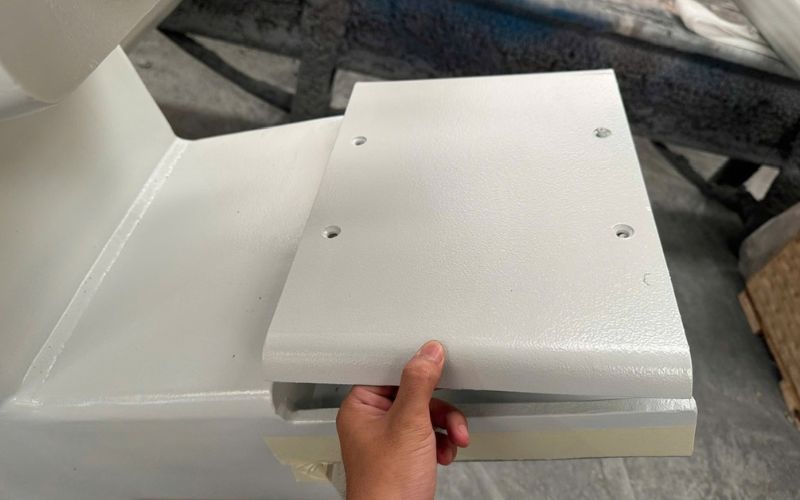
Most sheet metal components still retain residual oil, dust, burrs, and grinding marks after machining that have not been cleaned. If they proceed directly to painting without treatment, the steel surface is prone to defects such as blistering, bubbling, roughness, or poor paint adhesion to the metal. This directly reduces product lifespan and can even lead to unwanted workplace accidents.
-
Removing residual defects after machining
This is one of the most important purposes of surface finishing. Remaining burrs, sharp edges, weld slag, and scratches, if not carefully treated, can easily cut workers’ hands or damage adjacent parts during assembly.
-
Enhancing corrosion resistance
Corrosive agents such as moisture, water, oxygen, salt, and chemicals accelerate corrosion on sheet metal surfaces if left untreated. Common methods such as powder coating, painting, or hot-dip galvanizing create a protective layer that prevents the metal from direct contact with the corrosive environment.
For sheet metal components used in coastal areas or chemical environments, in addition to thorough surface finishing, materials with higher corrosion resistance such as Stainless Steel 304 or Stainless Steel 316 should be selected.
-
Improving aesthetics and uniformity of the product
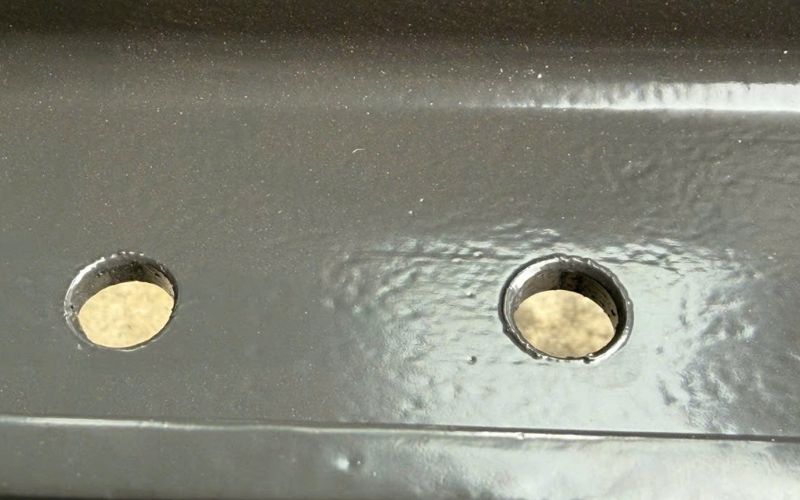
Applying surface finishing methods to sheet metal components not only ensures mechanical requirements but also meets aesthetic demands, especially for products that are directly visible such as electrical enclosures, metal cabinets, battery enclosures, etc. Moreover, the surface finishing process ensures uniformity in both texture and appearance of the metal surface.
Products that undergo careful surface finishing effectively control the following factors to meet standards:
- Color
- Gloss
- Texture
- Smoothness
- Surface uniformity
Products requiring precise color and texture standards often choose powder coating, while brushing and polishing are typically suitable for stainless steel to ensure surface aesthetics.
-
Meeting technical requirements
International standards for sheet metal fabrication clearly specify surface finish quality requirements. Typical examples include:
ISO 8501-1 – Surface preparation and cleanliness
ISO 12944 – Corrosion protection by protective paint systems
ISO 1461 – Hot-dip galvanized coatings
AS 1627 series – Surface preparation of steel and other metals
AS/NZS 4680 – Hot-dip galvanized coatings
AS 1397 – Continuously hot-dip metallic coated steel sheet and strip
AS/NZS 1580 series – Paint and coating testing
The AS 1627 series of standards applies to surfaces intended for painting, powder coating, metal spraying, or hot-dip galvanizing.
Therefore, for fabrication orders that require compliance with surface finishing standards, it is necessary to study and meet them correctly before delivery. Non-compliance will result in significant time and cost for repairs or even returns and refunds.
COMMON SURFACE FINISHING METHODS FOR SHEET METAL COMPONENTS
| Method | Working Principle | Suitable Applications | Corrosion Resistance | Selection Notes |
| Powder coating | Electrically charged powder is sprayed onto the metal surface, then heated so the powder particles melt and cure into a continuous coating | Enclosures, brackets, panels, frames, handrails, cabinets, and sheet metal components requiring uniform color and appearance | Good – high, depending on coating system and operating environment | Requires proper surface preparation; difficult to repair locally; temperature curing and coating thickness must be controlled |
| Wet Painting | Liquid paint is sprayed or applied onto the prepared surface; solvent/carrier evaporates and the paint layer cures | Structural components, enclosures, machinery parts, outdoor steelwork, and components requiring protective paint systems per specification | Medium – very high, depending on paint system | Surface preparation has a major impact on coating lifespan; environmental conditions during painting and curing must be controlled
|
| Hot-dip Galvanising (HDG) | Steel component is cleaned and immersed in molten zinc; reaction between steel and zinc forms Fe-Zn alloy layers plus an outer zinc layer | Steel brackets, frames, handrails, ladders, structural components, outdoor steelwork | High, very suitable for outdoor environment | Component size and design must suit the galvanizing bath; may affect appearance and certain tolerances; proper venting/drainage holes are required |
| Grinding | Surface material is removed using abrasive tools/discs to flatten or shape the surface | Weld areas, cut edges, burrs, weld spatter, and areas requiring flattening after fabrication | Does not create a direct corrosion-resistant layer | Grinding intensity must be controlled to avoid excessive material removal or deep scratches/grinding marks |
| Brushing | Surface is treated with abrasive belt/brush to create uniform directional grain patterns | Stainless steel and aluminum panels, architectural components, visible sheet metal parts | Does not directly create a protective layer; corrosion resistance depends on the material | Direction and uniformity of grain must be controlled; different abrasive grades can produce different appearances |
| Polishing | Progressively finer abrasives are used to reduce roughness and create a smooth/reflective surface | Stainless steel decorative components, architectural panels, visible metal parts | Does not create a separate protective layer; depends on material and surface conditions | Cost and time can be higher; scratch pattern, gloss level, and consistency between components must be controlled |
COMMON MISTAKES IN THE SURFACE FINISHING PROCESS
Although it is only one stage in the fabrication process, surface finishing has a major impact on the overall quality of sheet metal parts. Even a small careless action can affect surface quality and require significant time and effort to correct.
-
Incomplete surface cleaning
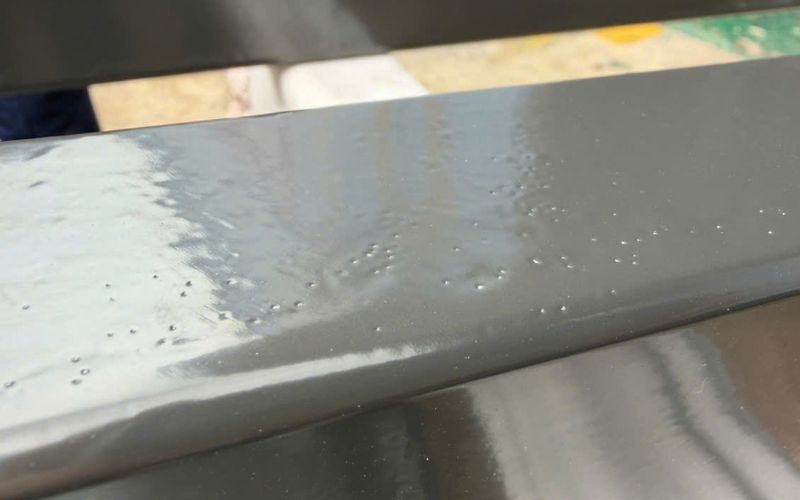
Inadequate cleaning can result from direct causes and surrounding environmental factors. Typical examples include:
- Many contaminants are not visible to the naked eye, so operators may assume the surface is clean enough.
- Components stacked on top of each other make detailed inspection of each piece difficult.
- Complex-shaped sheet metal parts are harder to inspect and clean thoroughly compared to flat sheets.
- Schedule pressure leads companies to shorten processes, especially cleaning, which is often seen as something that can be done quickly.
- Excessively long intervals between cleaning and painting allow the metal surface to re-accumulate dust, contact oil, or gradually form oxide/rust.
To address this issue, companies need detailed inspections to identify remaining contaminants on sheet metal components, while balancing production schedules to allow sufficient time for cleaning and the interval between cleaning and coating.
-
Selecting the wrong surface finishing method
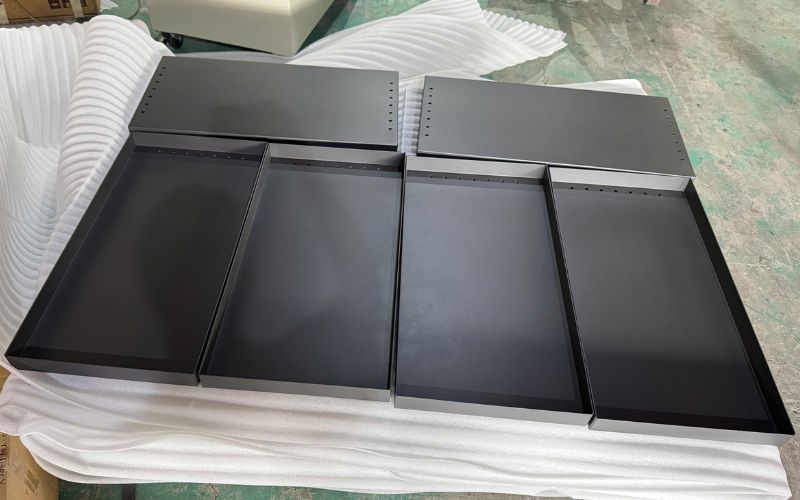
Not all sheet metal parts use the same surface finishing method. Choosing the appropriate method must be based on color, cost, appearance, and actual operating environmental conditions.
For example:
- Powder coating is suitable for many applications requiring aesthetics and surface durability.
- Hot-dip galvanizing is suitable when high corrosion resistance is required.
- Anodizing is commonly used for aluminum.
- Polishing is suitable for applications requiring a bright, high-finish metal surface.
To ensure the correct surface finishing technique is selected, the following must be determined:
- Base material
- Operating environment
- Degree of exposure to water/moisture/chemicals
- Corrosion resistance requirements
- Appearance requirements
- Component size and shape
- Tolerances and customer technical requirements
-
Lack of surface roughness control
Grinding, sanding, or abrasive blasting operations that are not uniformly controlled can result in areas with different roughness levels. This reduces the mechanical adhesion capability of some coating methods if the surface is too smooth. Conversely, an overly rough metal surface increases wear and coating non-uniformity.
To correct this situation, it is necessary to:
- Determine the appropriate surface profile for the coating type
- Control abrasive type and size
- Control blasting pressure and time
- Check surface profile with suitable measuring equipment when required
- Avoid excessive grinding in areas requiring dimensional accuracy
-
Ignoring the characteristics of the base material
Each material has unique mechanical properties. For example, stainless steel has a natural protective oxide layer, while carbon steel has different surface characteristics and reactions compared to aluminum. Using the wrong abrasive can cause contamination, discoloration, surface damage, or reduced corrosion resistance.
To avoid this mistake, identify the material before starting finishing and establish separate processes for each material. Especially for stainless steel and aluminum, contamination from tools, abrasives, and other materials in the production area must be controlled.
Surface finishing is one of the key processes that determines the overall quality of sheet metal components, as well as other structures such as structural steel, steel trusses, handrails, etc.
A well-controlled surface finishing process comes from a reputable fabrication unit. Therefore, prioritize selecting an experienced, high-quality metal fabricator to ensure sheet metal components operate stably and last throughout their service life.
If you need a high-quality sheet metal parts fabricator offering tailored metal solutions that meet international standards.
Contact Newinds:
Email: sales@newindscorp.com
Phone/Whatsapp/Zalo: Ann Yen +84 344 644 077