
This is probably one of the most common questions asked by businesses investing in trailers for transporting equipment, machinery, and industrial cargo. Both steel trailers and aluminum trailers offer excellent load-carrying capabilities, ensuring safe and efficient transportation. However, depending on the intended application and the type of cargo being transported, one material may be a better choice than the other.
UNDERSTANDING THE DIFFERENCE BETWEEN STEEL AND ALUMINUM TRAILERS
What Is a Steel Trailer?
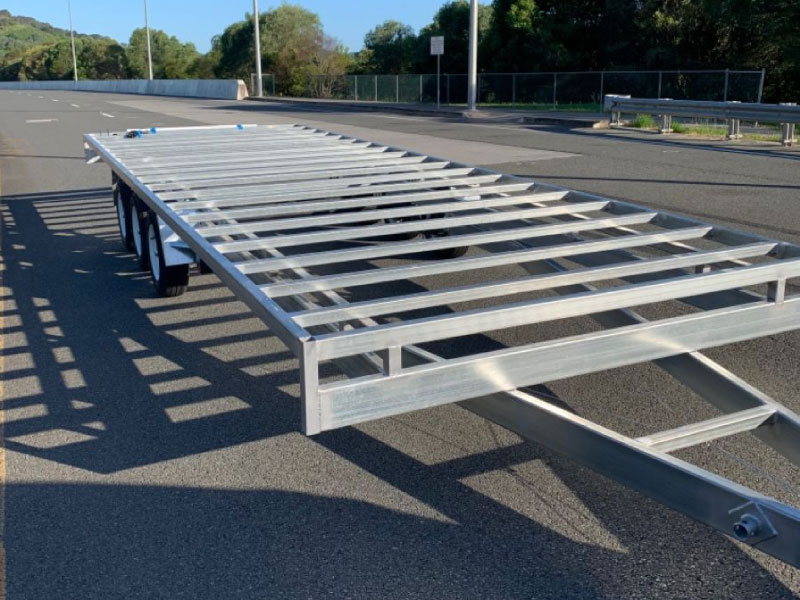
A steel trailer is a transport trailer designed to be coupled behind a semi-truck, truck, or pickup truck for hauling cargo. Its structural frame is fabricated from structural steel and consists of the main chassis, load-bearing beams, cross members, braces, and other reinforcing components to provide superior strength and durability.
Common Types of Steel Trailer
- Skeleton Trailer: Designed for transporting 20ft, 40ft, and 45ft containers, High Cube containers, refrigerated containers, and tank containers.
- Flatbed Trailer: Ideal for transporting structural steel, steel beams, steel pipes, steel coils, and other oversized cargo.
- Sidewall Semi-Trailer: Commonly used for cement bags, fertilizers, animal feed, palletized cargo, and construction materials.
- Curtainsider/Box Trailer: Suitable for electronics, FMCG products, pharmaceuticals, garments, furniture, and general freight.
- Lowboy Trailer: Used for excavators, bulldozers, cranes, mining equipment, industrial modules, and other heavy machinery.
- Tank Trailer: Designed for transporting gasoline, diesel, water, milk, chemicals, and other liquid cargo.
How Much Does a Steel Trailer Weigh?
The average weight of a steel trailer depends primarily on its design, intended application, and legal payload capacity.
| Trailer Type | Estimated Weight |
| Skeleton Trailer | 3,500–6,500 kg |
| Flatbed Trailer | 5,500–8,500 kg |
| Sidewall Semi-Trailer | 6,500–10,000 kg |
| Curtainsider Trailer | 7,000–10,500 kg |
| Box Trailer | 7,500–11,500 kg |
| Lowboy Trailer | 8,000–18,000 kg |
| Tank Trailer | 6,000–12,000 kg |
What Steel Is Used for Trailers?
To achieve the strength required for heavy-duty transportation, most modern steel trailers are manufactured using:
- Carbon steel
- High-strength structural steel
- Galvanized steel
How to Prevent a Steel Trailer from Rusting?
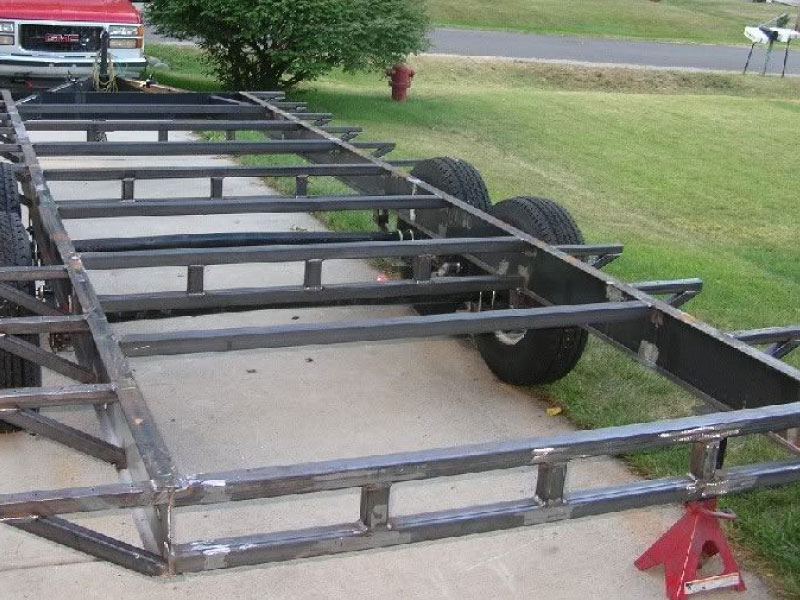
Steel trailers are known for their exceptional load-bearing capacity, impact resistance, and structural stability. However, one disadvantage of steel is its susceptibility to corrosion, particularly when operating in harsh environments such as:
- Coastal ports with salt-laden air
- Frequent exposure to rain and high humidity
- Transporting chemicals, fertilizers, cement, or industrial salt
Rust commonly develops around welds, corners, undercarriages, and water-trapping cavities. To minimize corrosion, manufacturers and fleet operators typically use the following methods:
- Hot-dip galvanizing for the steel frame trailer.
- Applying a two-coat paint system consisting of:
- Anti-corrosion primer (Epoxy Primer or Zinc-Rich Primer)
- Finish coat (Polyurethane Coating or Industrial Paint)
- Powder coating for enhanced durability.
- Thoroughly washing the trailer after operating near the sea, in rainy conditions, after transporting chemicals, or after driving on salt-treated roads (especially during winter in North America and Europe).
What Is an Aluminum Trailer?
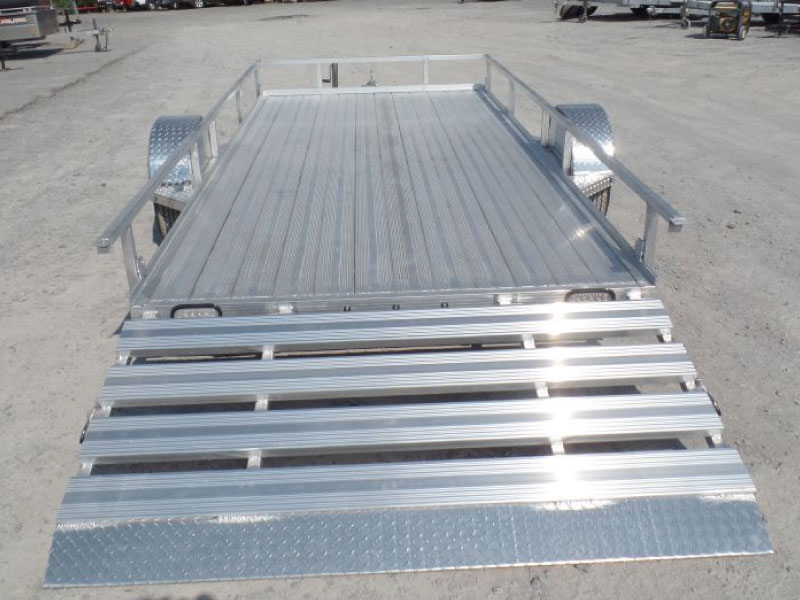
An aluminum trailer is a trailer whose chassis and body are primarily fabricated from aluminum alloys to transport various types of cargo while reducing overall vehicle weight.
How Much Does an Aluminum Trailer Weigh?
One of the biggest advantages of aluminum trailers is their lightweight construction. Aluminum is approximately one-third lighter than steel, allowing operators to carry more cargo per trip without exceeding legal gross vehicle weight limits while also improving fuel efficiency.
| Trailer Type | Estimated Weight | Lighter Than Steel Trailer |
| Skeleton Trailer | 2,500–4,500 kg | 20–35% |
| Flatbed Trailer | 4,000–6,500 kg | 25–35% |
| Sidewall Semi-Trailer | 5,000–8,000 kg | 20–30% |
| Curtainsider Trailer | 5,500–8,500 kg | 20–30% |
| Box Trailer (Dry Van) | 6,000–9,500 kg | 20–30% |
| Lowboy Trailer | 6,000–14,000 kg | 15–30% |
| Tank Trailer | 4,500–9,000 kg | 20–35% |
What Aluminum Is Used for Trailers?
Rather than relying on a single aluminum grade, trailer manufacturers typically use a combination of aluminum alloys optimized for different structural components, including:
- Aluminum 6061 (Most Common Structural Grade)
- Aluminum 6063 (Extrusion & Shaping Grade)
- Aluminum 5052 (Sheet & Corrosion-Resistant Grade)
- Other specialized alloys, including: Aluminum 5083, 7000 Series Aluminum
How to Prevent Corrosion on an Aluminum?
Although aluminum does not rust like steel, it can still experience corrosion under certain environmental conditions, including:
- Coastal and marine environments
- Industrial chemical exposure
- Roads treated with de-icing salts
To extend the service life of an aluminum trailer, consider the following maintenance practices:
- Thoroughly clean the trailer frame, undercarriage, bolt connections, hidden corners, and gaps after exposure to seawater, coastal environments, de-icing salts, or chemicals.
- Apply protective coatings such as:
- Clear Protective Coating
- Wax Coating
- Marine-Grade Protective Coating
- Perform routine inspections to remove standing water from frame cavities, joints, drainage channels, and other moisture-prone areas.
COMPARISON TABLE: STEEL TRAILER VS. ALUMINUM TRAILER
| Criteria | Steel Trailer | Aluminum Trailer |
| Weight | Heavier | 20–40% lighter |
| Payload Capacity | Very high. Standard models typically carry 15–40 tons, while multi-axle heavy-duty trailers can handle 60–120 tons. | High. Standard models generally carry 10–35 tons, while heavy-duty versions can carry up to 40 tons. |
| Impact Resistance | Excellent; highly resistant to deformation from impacts. | Moderate; more susceptible to dents under heavy impact. |
| Corrosion Resistance | Requires painting, galvanizing, and regular maintenance to prevent rust. | Naturally corrosion-resistant and well suited for humid or coastal environments. |
| Initial Purchase Cost | Approximately 15–40% lower than aluminum. | Approximately 20–50% higher than steel trailers. |
| Long-Term Maintenance Cost | Higher due to periodic repainting and corrosion protection. | Lower maintenance costs. |
| Best Applications | Construction, mining, heavy equipment transportation. | Long-haul logistics, general freight, and coastal transportation. |
| Repairability | Easy to weld and repair at relatively low cost. | More difficult and expensive to repair due to specialized welding requirements. |
IS STEEL BETTER THAN AN ALUMINUM TRAILER?
A steel trailer is generally the better choice if you:
- Transport excavators, bulldozers, cranes, heavy construction equipment, or structural steel.
- Operate in demanding environments such as construction sites, mining operations (particularly in Australia’s rugged terrain), or rough roads with frequent impacts.
- Require quick, cost-effective repairs using conventional welding and reinforcement techniques.
An aluminum trailer is generally the better choice if you:
- Perform long-distance transportation where reducing vehicle weight increases payload capacity and improves fuel efficiency.
- Frequently operate in coastal or high-humidity environments.
- Transport palletized goods, consumer products, or lightweight containerized cargo.
Hopefully, this comparison has helped you determine which trailer material best suits your transportation requirements. Ultimately, whether a steel or an aluminum trailer is the better choice depends largely on your intended application, operating environment, and the type of cargo you transport.
To ensure you select the most suitable trailer design and material, it is advisable to consult an experienced trailer chassis manufacturer that can recommend a solution tailored to your operational needs. If you need a high-quality trailer chassis manufacturer in Vietnam, offering custom-fabricated buildings that meet international standards.
Contact Newinds:
- Email: sales@newindscorp.com
- Phone/Whatsapp/Zalo: Ann Yen +84 344 644 077