
The process of transporting materials, products, or waste within factories and warehouses would be extremely difficult without steel hoppers. Steel hoppers play a crucial role in storing and conveying materials to the correct locations, helping keep workspaces organized and improving operational efficiency.
To optimally meet these requirements, steel hopper suppliers categorize steel hoppers into distinct types to effectively serve specific application purposes.
STRUCTURE OF A STEEL HOPPER AND HOW IT WORKS
A steel hopper typically consists of the following main components:
- Wide top opening for material loading
- Hopper body, serving as an intermediate storage chamber
- Discharge outlet located at the bottom
- Load-bearing steel support frame, ensuring structural stability and safety
- Auxiliary components such as control valves, material level sensors, and conveyors
Operating Principle
Bulk materials are loaded through the inlet opening and flow down into the hopper body for temporary storage. The weight of the material creates pressure, allowing it to flow naturally toward the bottom outlet. Operators can control the discharge speed and material flow rate using control valves.
-
Conical Steel Hopper
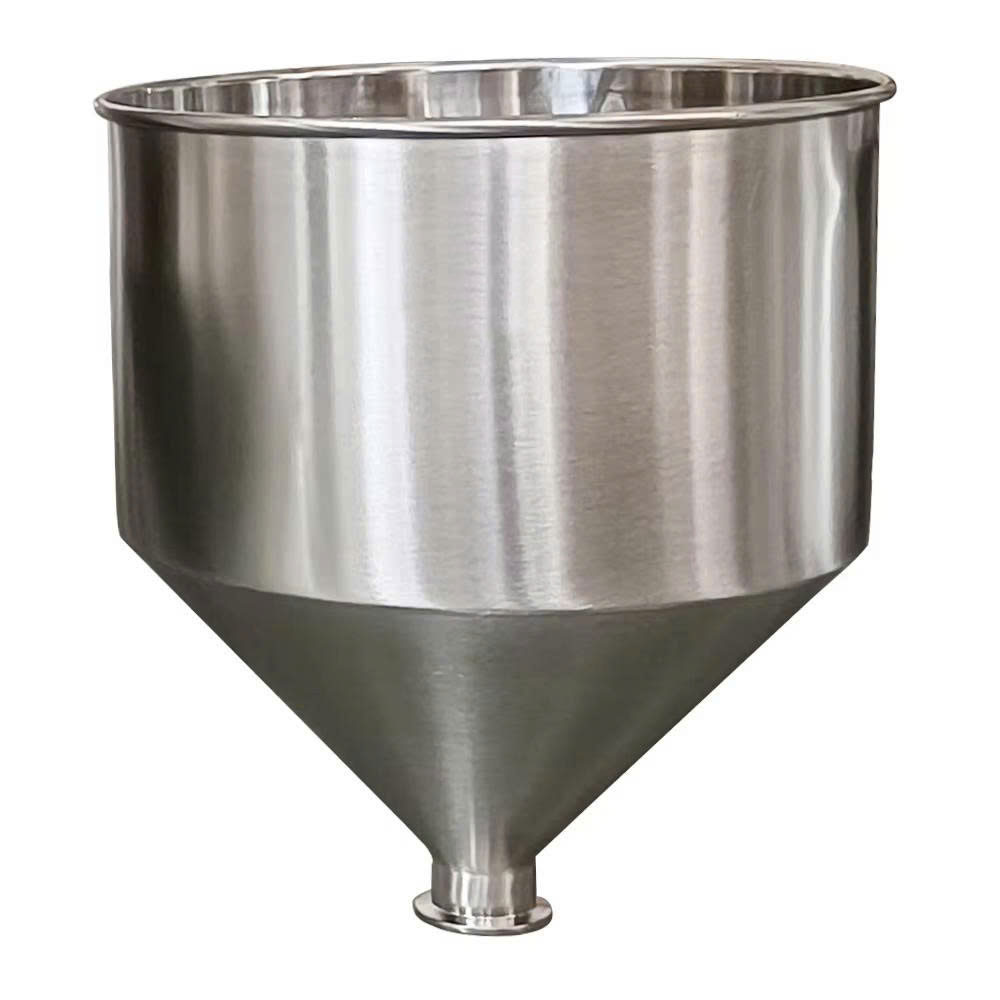
A conical steel hopper features sloped walls with angles typically ranging from 45° to 60°, resembling a cone shape. This design allows materials to flow downward more evenly, cleanly, and consistently.
However, conical steel hoppers require high welding precision, resulting in higher fabrication costs and greater vertical space requirements.
Suitable materials:
- Granular and pelletized materials
- Dry bulk materials with small to medium particle sizes
- Dry powders
-
Pyramid Steel Hopper
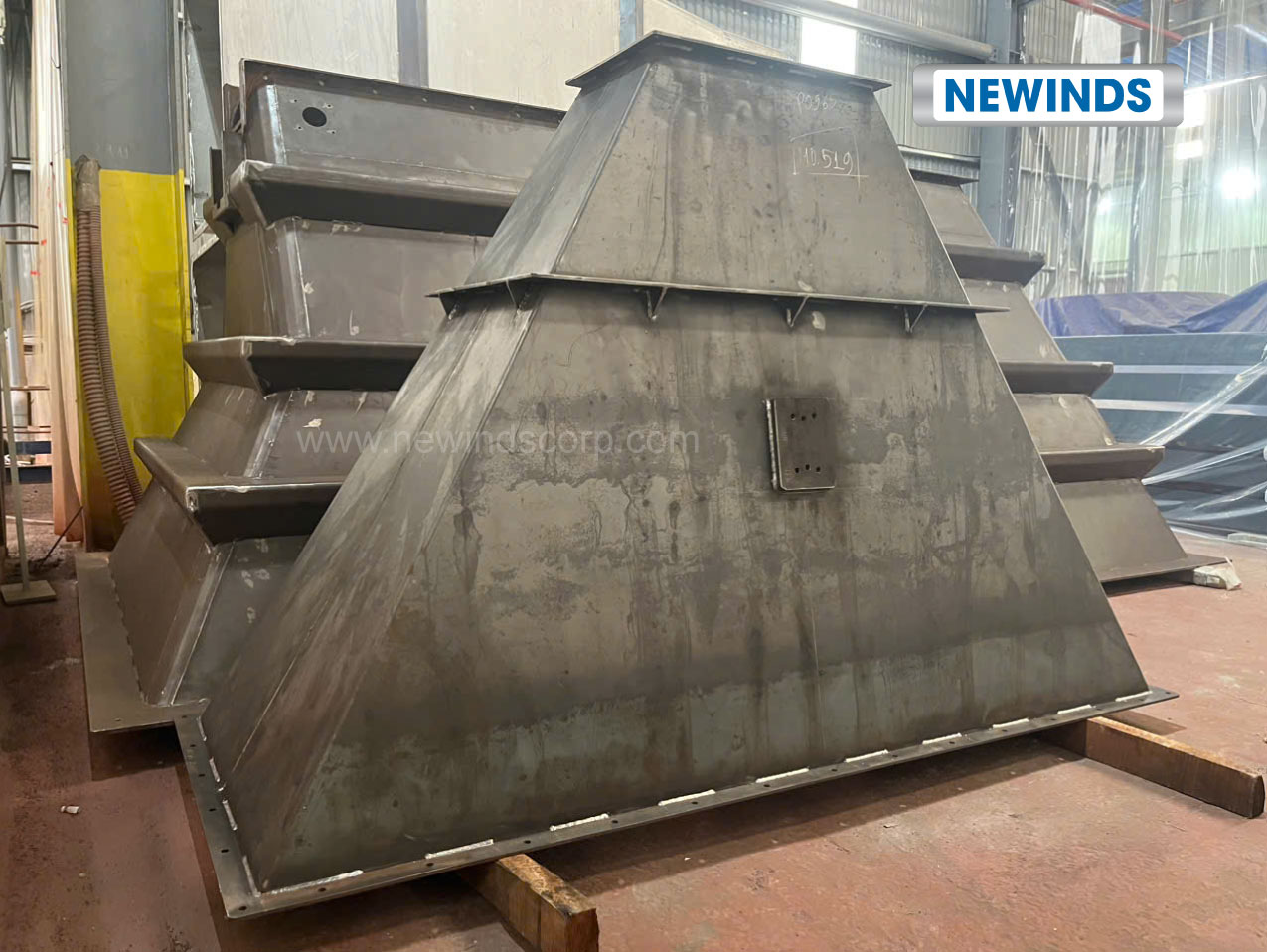
Pyramid steel hoppers have a four-sided pyramidal shape, making them ideal for limited or square/rectangular spaces. Compared to conical steel hoppers, this type is easier to fabricate and therefore more cost-effective.
However, this design can cause uneven material flow, leading to blockages and dead zones that complicate operation and cleaning.
Suitable materials:
- Metal scrap
- Dry stone, gravel, and sand
- Demolition materials
- Coarse, dry bulk materials
-
Mass Flow Hopper
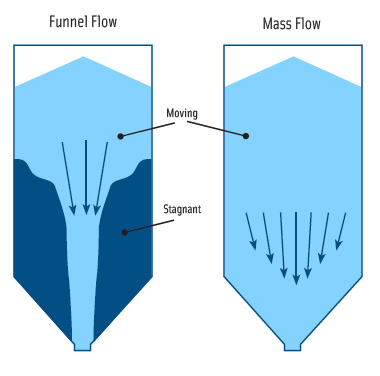
Mass flow hoppers ensure that all materials move uniformly from top to bottom based on the first-in, first-out (FIFO) principle. The hopper walls are designed with steep angles to prevent material segregation or blockage, a design approach typically adopted by professional steel hopper suppliers to improve flow consistency. The internal surfaces are often polished or lined with liners or epoxy coatings to reduce friction.
Despite offering excellent performance for material storage and discharge, mass flow hoppers have relatively high costs due to their complex design and fabrication requirements.
Suitable materials:
- Fine powders such as cement, stone powder, and mineral powders
- Moist materials such as dried sludge and dry clay
- Materials prone to caking, such as moist sugar and hygroscopic chemical powders
- Materials requiring strict FIFO control, such as food-grade powders
-
Funnel Flow Hopper
Funnel flow hoppers are the most commonly used type today. Their funnel-shaped design allows materials at the center to flow first, while materials near the walls remain stationary until the overall material level drops sufficiently. This design is simple, easy to fabricate and install, and does not require special internal surface treatment, resulting in lower costs.
However, funnel flow hoppers may cause material segregation, and if not agitated regularly, materials stored for long periods may harden. Therefore, this type is best suited for applications with lower uniformity requirements and cost-sensitive projects.
Suitable materials:
- Uniform-sized grains such as rice, beans, and corn
- Dry, low-adhesion materials such as dry sand, small gravel, and crushed stone
- Pelletized materials such as plastic pellets and fuel pellets
-
Self-Dumping Hopper
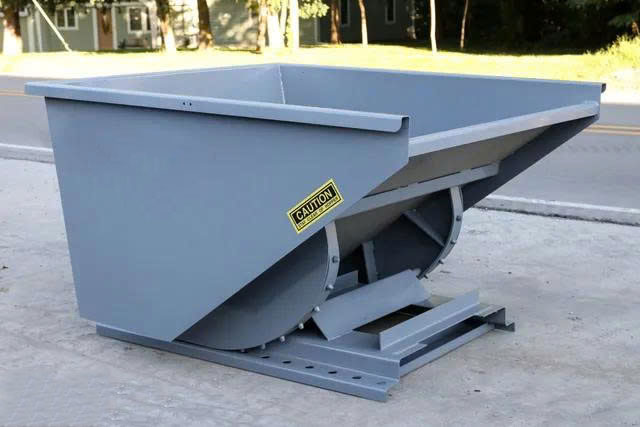
As the name suggests, a self-dumping hopper features an automatic dumping mechanism that activates once certain conditions are met, such as a specific tilt angle, minimum load weight, or release of a safety latch. This mechanism enables fast operation, eliminates manual handling, and ensures safety when discharging heavy materials.
However, self-dumping hoppers do not offer precise flow control like mass flow hoppers and are not suitable for very fine materials such as cement, animal feed powder, lime powder, or coal dust.
Suitable materials:
- Loose metal materials such as steel scrap, metal chips, and metal fragments
- Loose construction materials such as sand, gravel, crushed stone, and concrete debris
- Industrial waste
- Large-sized raw materials such as ore, coarse crushed stone, and recyclable materials
In addition to the common steel hopper types mentioned above, the market offers many other hopper designs tailored to specific project requirements and material characteristics. For greater peace of mind when selecting a hopper, it is recommended to contact a reliable steel hopper supplier for professional consultation and to choose the most suitable hopper solution for your project.