
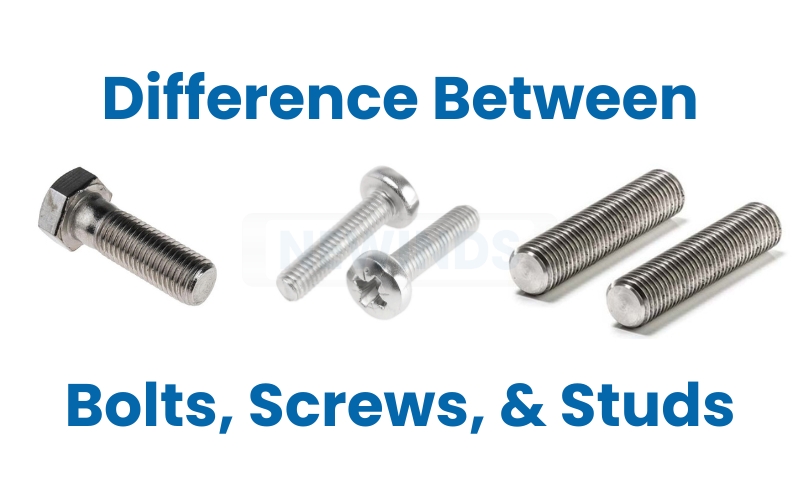
Bolts, Screws, and Studs are key components that play a critical role in ensuring efficient operation of structures, machinery, equipment, and components. Even the smallest error in bolts, screws, or studs can disrupt production lines, operational processes, or even lead to serious accidents.
WHAT IS A BOLT?
Bolt is one of the most common types of fasteners in the mechanical industry. Its main function is to create a strong, secure connection between components to withstand loads, ensure operational safety, and prevent leaks. To perform these functions effectively, a basic bolt consists of 3 main parts:
- Head / Bolt head
- Shank / Body
- Threaded portion / Threaded section
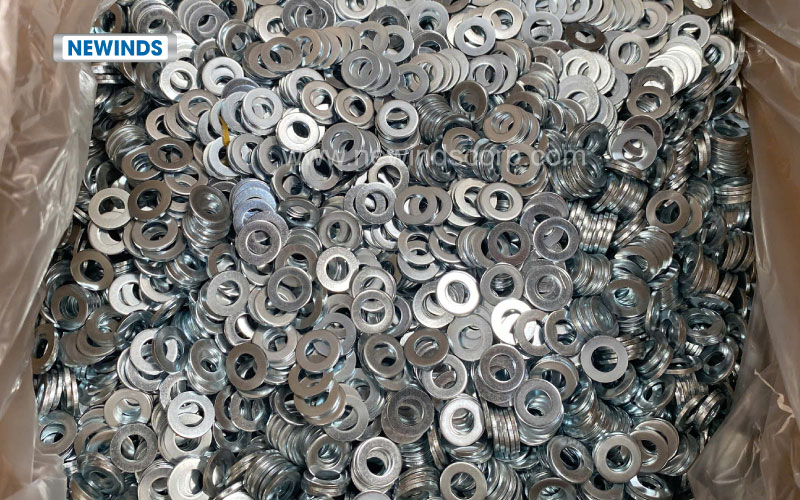
In addition to these 3 main components, a bolted joint also includes a nut and washers.
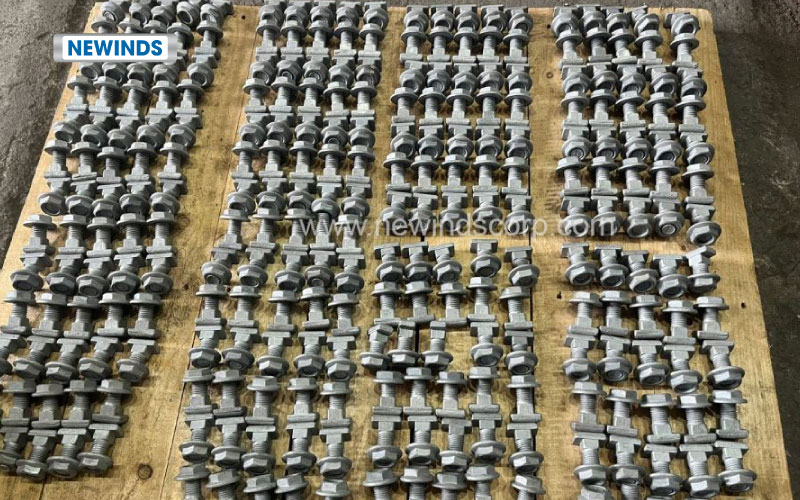
Common Types of Bolts
- Hex bolts
- Allen bolts
- High strength bolts
- Anchor bolts
- Eye bolts
- Wing bolts
Installation Method
Insert the bolt through the clearance holes of the parts to be joined (add washers if necessary). Then hand-tighten the nut initially to eliminate any gaps. Use a torque wrench to tighten progressively in sequence to achieve the precise preload.
Advantages
- Easy to disassemble for maintenance and cleaning
- Capable of withstanding high loads with flexible adjustment to resist material fatigue
- The bolt head combined with washers helps distribute force evenly
- When tightened with a torque wrench, preload can reach up to 90%, increasing reliability under dynamic loads
- Available in various materials such as steel 8.8/10.9, stainless steel, or with hot-dip galvanised coatings to suit harsh, hot, and humid environments.
Disadvantages
- Requires access from both sides (bolt head and nut), which can be difficult in tight or obstructed spaces
- Bolts may loosen under vibration or temperature changes if preload is insufficient or if lock nuts/washers are not used, increasing the risk of accidents
- Initial investment cost is high: High-strength bolts like 10.9/12.9 are more expensive than screws or welding, and require specialized tightening tools
- In harsh environments or tropical climates, using low-quality material or without galvanization can lead to rust.
Applicable Standards
- International: ISO 4014, ISO 4017, ISO 4762
- United States: ASTM F1554, ASTM A193, ASTM A325/A490
- Australia: AS/NZS 1252.1:2016, AS 1111.1, AS 1110.1, AS/NZS 4291.1, AS 2528
WHAT IS A SCREW?
A screw is a fastener with a helical thread around the shank, used to join and fix components together. It provides connection between parts and can withstand light to medium tensile and shear forces.
Similar to bolts, a screw requires 3 main components to perform its functions effectively:
- Head
- Shank
- Threaded Portion
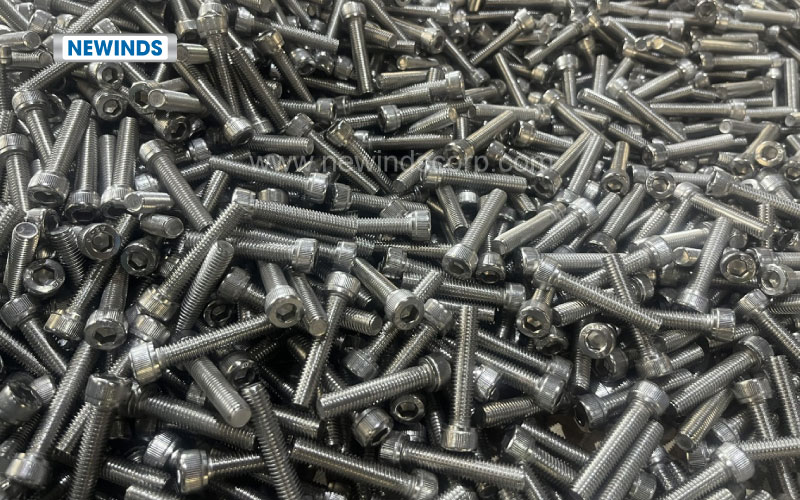
Common Types of Screws
- Machine screws
- Self-tapping screws
- Self-drilling screws
- Wood screws
- Sheet metal screws
- Set screws
- Countersunk screws
- Socket head cap screws (hex socket head screws – often confused with bolts but are actually screws)
Installation Method
Position the screw head at the installation point, then drive it directly into a pre-drilled hole. For self-drilling types, it can be driven straight into the material without pre-drilling a threaded hole. Use a screwdriver, Allen key, or automatic screw gun to tighten until the appropriate torque is reached.
Advantages
- Fast and easy assembly since only one side needs access – ideal for small components, small machinery, electronics, and furniture
- Saves on accessories as no nut is required
- Wide variety of sizes and head types (Phillips, Torx, slotted, hex socket…) suitable for many different applications
- More cost-effective than bolts of the same size for light to medium-duty applications
Disadvantages
- Only suitable for light to medium applications; for high loads, bolts are more appropriate
- Prone to material fatigue or breakage if overloaded
- Not suitable for joints requiring precise high clamping force or strong vibration resistance
- May require additional anti-rotation measures in vibrating environments
Applicable Standards
- International: ISO 7045, ISO 7046, ISO 4762 (socket head), ISO 10642 (countersunk)
- United States: ASME B18.6.3 (machine screws), ASME B18.2.1 (socket head cap screws)
- Australia: AS 1111 (hexagon screws), AS 1420 (self-tapping screws), AS/NZS 4291.1 (mechanical properties of fasteners), AS 3566 (self-drilling screws for construction)
WHAT IS A STUD?
A stud provides a precise connection with uniform clamping force and pure tensile load-bearing capability. Unlike bolts and screws, studs are typically headless, with external threads on both ends or along the entire body. One end is screwed into a pre-tapped hole, while the other end is secured with a nut. This design ensures safety under strong vibration, high temperature, or high pressure with minimal damage to the main tapped thread.
A stud consists of 3 main components:
- Threaded portion
- Shank
- Threaded portion
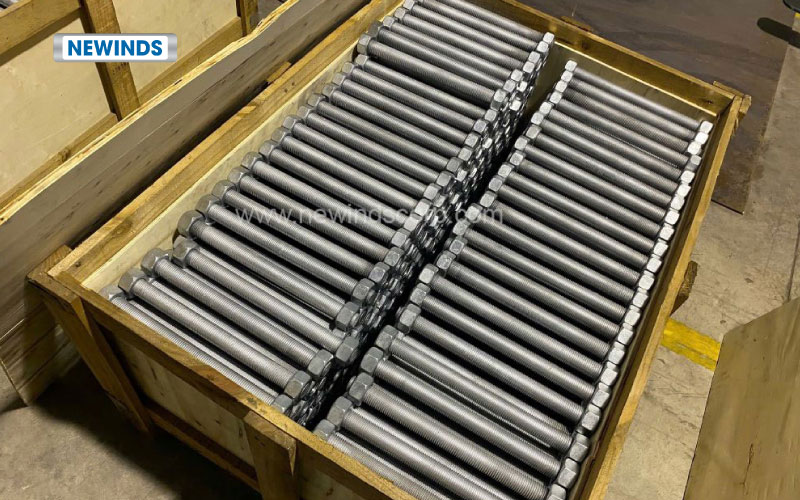
Common Types of Studs
- Double-ended studs (most common)
- Continuous thread studs (fully threaded)
- Tap-end studs (one end has shorter thread
- Flange studs (stud bolts for flanges, per ASTM A193)
- Wheel studs (wheel lug studs for cars/motorcycles)
- Cylinder head studs (studs for engine cylinder heads)
Installation Method
Use specialized tools such as a stud driver or hand-tighten lightly to screw one end into the pre-tapped hole. Then pass the component to be joined through the clearance hole. Place a washer and tighten the nut on the remaining threaded end. Use a torque wrench to tighten the nut in multiple passes to achieve accurate preload.
Advantages
- Most precise and uniform clamping force compared to bolts and screws
- Easy positioning and quick assembly
- Can be disassembled and reassembled many times with minimal damage to the main tapped thread – ideal for engines, turbines, and flanges
- Higher load capacity than bolts of the same size
- Suitable for harsh environments when using premium materials like B7, B16
Disadvantages
- Initial installation is more difficult due to the need to accurately fix one end
- Not suitable for thin joints or applications requiring fast tightening – bolts or screws are better in those cases
- Higher cost when using premium materials for harsh environments and requires specialized tightening tools
Applicable Standards
- International: ISO 13918 (welding studs), ISO 4014/4017 (reference for threads)
- United States: ASTM A193 (stud bolts for high pressure/temperature, common grades B7, B8, B16), ASTM A320 (for low temperature)
- Australia: AS/NZS 1252.1:2016 (high-strength structural fastener assemblies, including studs), AS 2528 (bolts/studbolts for flanges), AS/NZS 4291.1 (mechanical properties of fasteners).
DETAILED COMPARISON BETWEEN BOLTS, SCREWS, AND STUDS
| Criterion | Bolts | Screws | Studs |
| Main structure | Has a head (usually hex), shank, partial or full thread | Has a head (Phillips, Torx, slotted, hex socket…), shank with mostly or full thread | Headless, external thread on both ends (double-ended) or full thread |
| Requires Nut | Always required (tightened with nut) | Not required (self-threading or into pre-tapped hole) | Required (on one end; the other end screws into pre-tapped hole) |
| Self-tapping | No | Yes (many types: self-tapping, self-drilling) | No |
| Preload Accuracy | Medium (torsion occurs during tightening) | Low to medium | Highest (no torsion on stud itself) |
| Frequent Disassembly | Good (easy to access head) | Good for small sizes, but threads wear over time | Excellent (minimal damage to tapped hole) |
| Main Applications | Steel structures, workshops, bridges, machinery frames, anchor bolts | Fast assembly: furniture, electronics, roofing sheets, small machines, wood/plastic | Engine cylinder heads, pipe flanges (oil & gas), turbines, pressure vessels, wheel studs |
| Key Advantages | Excellent shear resistance (unthreaded shank), easy disassembly, even load distribution | Fast installation, no nut needed, versatile head types
|
Most precise and uniform clamping, handles extreme conditions, easy positioning
|
| Disadvantages | Requires access from both sides, can loosen under strong vibration | Poor performance under heavy/dynamic loads, threads wear easily
|
Initial installation more difficult, higher cost for premium grades
|
| Cost | Medium to high (high-strength grades) | Low to medium
|
Medium to high (especially ASTM A193 grades)
|
WHEN TO CHOOSE BOLTS, SCREWS, AND STUDS?
To determine when to choose bolts, screws, or studs, you need to consider the load-bearing requirements, installation conditions, operating environment, frequency of disassembly, and type of load.
Choose Bolts When:
- High shear force combined with tensile force is required, especially under heavy dynamic loads and strong vibration.
- Connecting two or more non-threaded components, with easy access to both sides for precise tightening.
- Periodic disassembly is needed but not excessively frequent, and long-term durability is essential.
- Suitable for: steel structures in factories, bridges, roads, anchor foundations, scaffolding, or heavy machinery systems.
Choose Screws When:
- Fast assembly and disassembly are needed, with access from only one side, and for light to medium loads.
- Used on materials that require self-threading (self-tapping or self-drilling).
- Small to medium-sized projects where high aesthetics and rapid mass assembly are prioritized.
- Suitable for: prefabricated houses, partition walls, roofing sheets, office machines, small steel components, residential houses, or worker housing.
Choose Studs When:
- Uniform and highly precise tensile clamping force is required, capable of withstanding high pressure and strong vibration.
- Frequent disassembly (more often than bolts) is needed without damaging the main tapped thread.
- One side is thick or inaccessible, or precise positioning is critical.
- Suitable for: car and motorcycle engines, pipe flanges, pumps, air compressors.
In summary, the above content provides a comprehensive overview of bolts, screws, and studs to help you easily distinguish and select the right one. For greater certainty, you should contact a specialized fastener supplier or engineering expert for advice on the most suitable fastener type for your specific application.
If you need a high-quality steel fabricator offering tailored bolts, screws, and studs that meet international standards.
Contact Newinds:
Email: sales@newindscorp.com
Phone/Whatsapp/Zalo: Ann Yen +84 868 482 038