This is a question that not only you but also many investors and contractors face when building any steel structure project. Since these two types of structures are quite similar, it’s easy to feel unsure when deciding. Take just 3 minutes to read this article, and you’ll find the answer to choose the most optimal construction solution.
WHAT ARE STEEL TRUSSES?
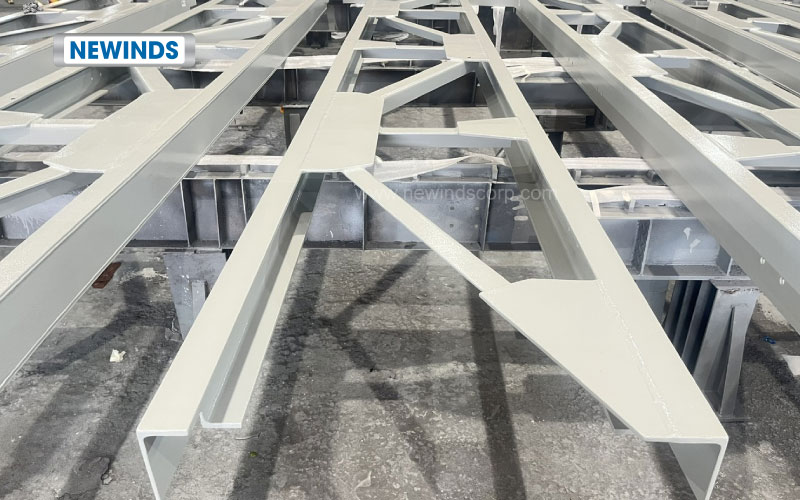
Steel trusses are a load-bearing frame system made up of steel members connected together to form triangular shapes. This design helps distribute loads evenly, provides excellent load-bearing capacity, and ensures long-term durability.
Main Components
To perform these functions effectively, trusses typically consist of:
- Top chord
- Bottom chord
- Web members
- Connection nodes (joints) – usually welded
HOW DO STEEL TRUSSES WORK?
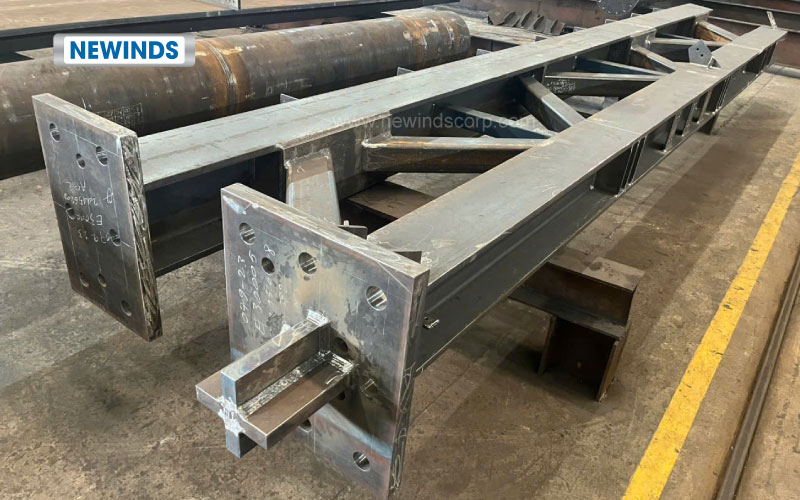
The load from the roof is transferred to the top chord, then evenly distributed through the web members in multiple directions. Each steel member in the truss works to spread the forces and prevent the structure from sagging. Finally, the forces are carried to both ends of the truss and transferred down to the columns and foundation.
COMMON TYPES OF STEEL TRUSSES
- Pratt Truss
- Warren Truss
- Fink Truss
- Howe Truss
- Scissor Truss
- North Light Truss
SUITABLE PROJECTS
Industrial factories: requiring large clear spans without internal columns for easy movement of machinery.
Warehouses: to maximize storage space and hold more goods.
Sports halls/stadiums: needing large spans and unobstructed views.
PROS & CONS
Advantages:
- Can support very heavy loads without deforming the structure, thanks to the triangular shape that effectively distributes forces to the columns and foundation.
- Excellent long-span capability, creating spacious interiors – ideal for commercial and industrial buildings.
- Highly versatile in design due to the many different truss configurations available.
- High long-term stability with minimal deformation over time.
Disadvantages:
- Design is relatively complex, requiring more time, cost, and experienced engineers/fabricators.
- Low flexibility – difficult to modify later if the building’s purpose changes.
- Very low tolerance for errors; even a small mistake during fabrication can affect the entire structure.
WHAT ARE STEEL RAFTERS?
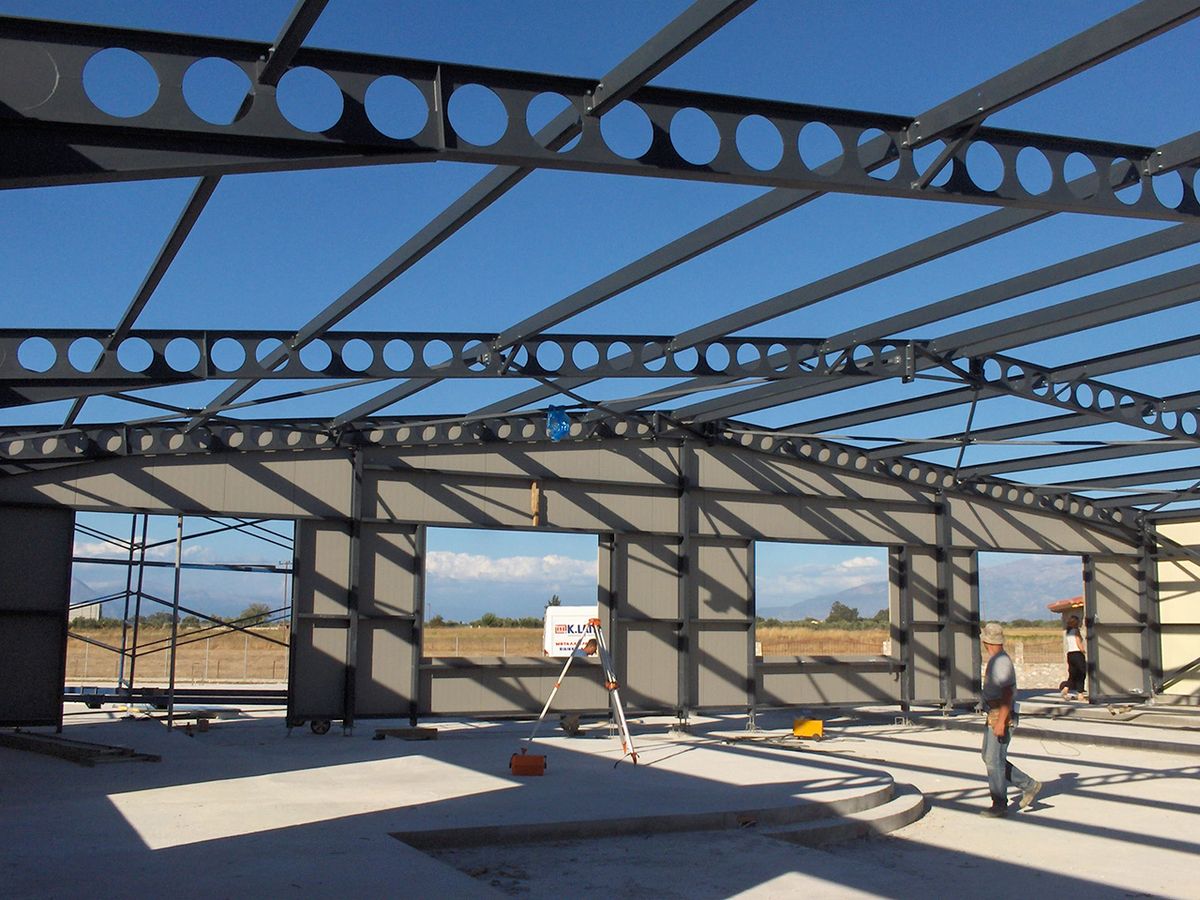
Steel rafters are a system of straight beams in various shapes (C-shaped, I-beam, Box-section) that efficiently transfer roof loads down to the walls and columns.
Main Components
Unlike the triangular structure of trusses, steel rafters consist of straight beams with the following main parts:
- Top flange
- Bottom flange
- Web
- Supports
COMMON TYPES
- C-shaped rafters
- I-beam rafters
- Box-section rafters
SUITABLE PROJECTS
- Medium to small-scale warehouses and industrial factories
- Pre-engineered steel buildings
- Manufacturing plants
PROS & CONS
Advantages
- Good load-bearing capacity compared to wood or concrete, helping reduce the load on the foundation and overall project cost.
- Simple and quick to install, significantly saving time and labor costs, allowing faster project completion and earlier operation/profit generation.
- Highly flexible – easy to adjust, expand, or modify in the future without affecting the original structure.
Disadvantages
- Initial cost may be higher for small-scale or residential projects.
- Prone to rust and corrosion if not regularly inspected and maintained.
- Poor thermal and sound insulation, so additional insulation layers are usually required, increasing overall cost.
COMPARISON TABLE: STEEL TRUSSES VS STEEL RAFTERS
| Criteria | Trusses | Rafters |
| Main structure | Multiple steel members connected into a load bearing frame, usually triangular W, K, Howe, Pratt, etc. | Multiple inclined steel beams, mainly I, H or C sections |
| Primary Function | Supports roof loads and distributed them evenly to column and foundation. | Transfers loads from roofing, insulation, and accessories to the main frame. |
| Span Capability | Excellent – can span 10 – 30m without intermediate columns | More limited compared to trusses |
| Cost | 15 – 30% cheaper | Higher than trusses |
| Customizability | Difficult to change shape, slope, or height | Easy to expand, adjust roof height, or modify eave details. |
FAQs
- When should you use trusses and when should you use rafters?
Steel trusses are the best choice for projects that require large spans (>15m), clear open space without internal columns, and high load capacity. Typical examples: factories, warehouses, sports halls, etc.
Steel rafters are optimal for small to medium-scale projects that need simple design, fast construction, high flexibility, and future modifications. Typical examples: residential buildings, pre-engineered steel houses, small-medium factories, and warehouses.
- Can rafters replace trusses?
Yes, but not always. Replacement is only feasible when:
- The roof span is small (under 10m)
- Roof loads are not too heavy
- The columns and beams below are strong enough to support the loads
Steel rafters cannot replace trusses when:
- The building requires a large span
- You need column-free space for easy movement and maximum storage
- You want to optimize cost while maintaining the ability to expand or modify the space later
- Can steel rafters and trusses be combined in the same building?
Absolutely. Many contractors and investors choose this hybrid approach: using steel trusses for the main areas that need large open spaces and long spans, and steel rafters for secondary areas to save cost and allow easier construction and flexibility.
- Which is more cost-effective: trusses or rafters?
Trusses are generally more cost-effective for large projects because they reduce the number of columns, speed up installation, and allow the building to be put into operation earlier.
- Which is more durable: steel rafters or trusses?
Steel trusses are usually more durable than rafters, especially in large buildings with heavy loads. The triangular structure distributes forces evenly, preventing stress concentration. They handle wind loads, roof loads, and hanging loads very effectively without sagging or deforming, even over long spans.
Newinds believes that after just 3 minutes of reading this article, you now have a clear answer on whether to choose steel trusses or steel rafters. If you’re still unsure, the best option is to consult a reputable structural steel fabricator for the most optimal technical solution tailored to your project.
If you need a reliable structural steel manufacturer offering tailored metal solutions that meet international standards.
Contact Newinds:
Email: sales@newindscorp.com
Phone/Whatsapp/Zalo: Ann Yen +84 344 644 077